

I spent the first eight years of trucking ignoring compression socks. CHARMKING was just a name I kept seeing pop up in driver forums, and I figured the whole category was for nurses and pregnant women, not someone running I-40 at 2 a.m. Then I got off a 14-hour push from Albuquerque to Amarillo and my ankles looked like I had stuffed oranges into my boots. My dispatcher called while I was standing there staring at my own feet. That was the last time I drove without compression on my legs.
These are not miracle socks. They will not make the miles shorter or the traffic on I-10 disappear. But they address ten real, specific problems that come up on long drives, and if you have been on the road long enough you have run into most of them. Here is what they actually do.
Your legs hurt after long drives because blood is pooling in your ankles. This is the fix most drivers find first.
CHARMKING compression socks come in a 3-pair pack at 15-20 mmHg, which is the clinical sweet spot for driving. Over 89,000 Amazon reviews back that up. Check today's price and see if they are in stock.
Amazon Check Today's Price on Amazon →They Keep Blood Moving When You Cannot
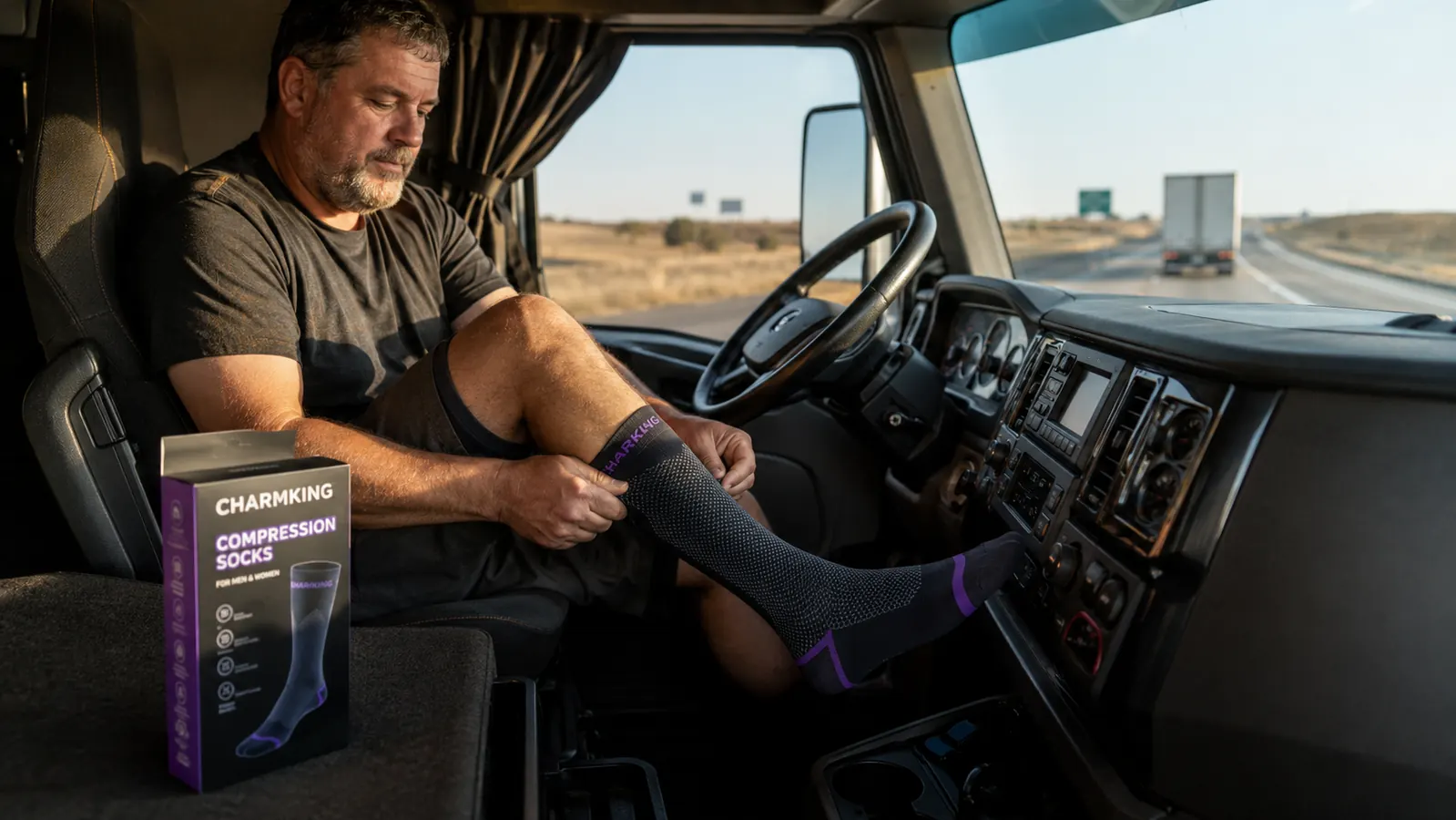
Sitting for five or six hours straight does something bad to the veins in your lower legs. Blood wants to pool in the feet and ankles because there is no muscle pump working to push it back up. Compression socks apply graduated pressure, tightest at the ankle and easing off toward the calf, which physically squeezes the blood back up toward your heart. I can tell the difference by hour four. Without compression, my legs feel heavy and start to ache. With them on, I get to the fuel stop and my feet feel roughly the same as when I left the terminal.
They Reduce Ankle and Foot Swelling
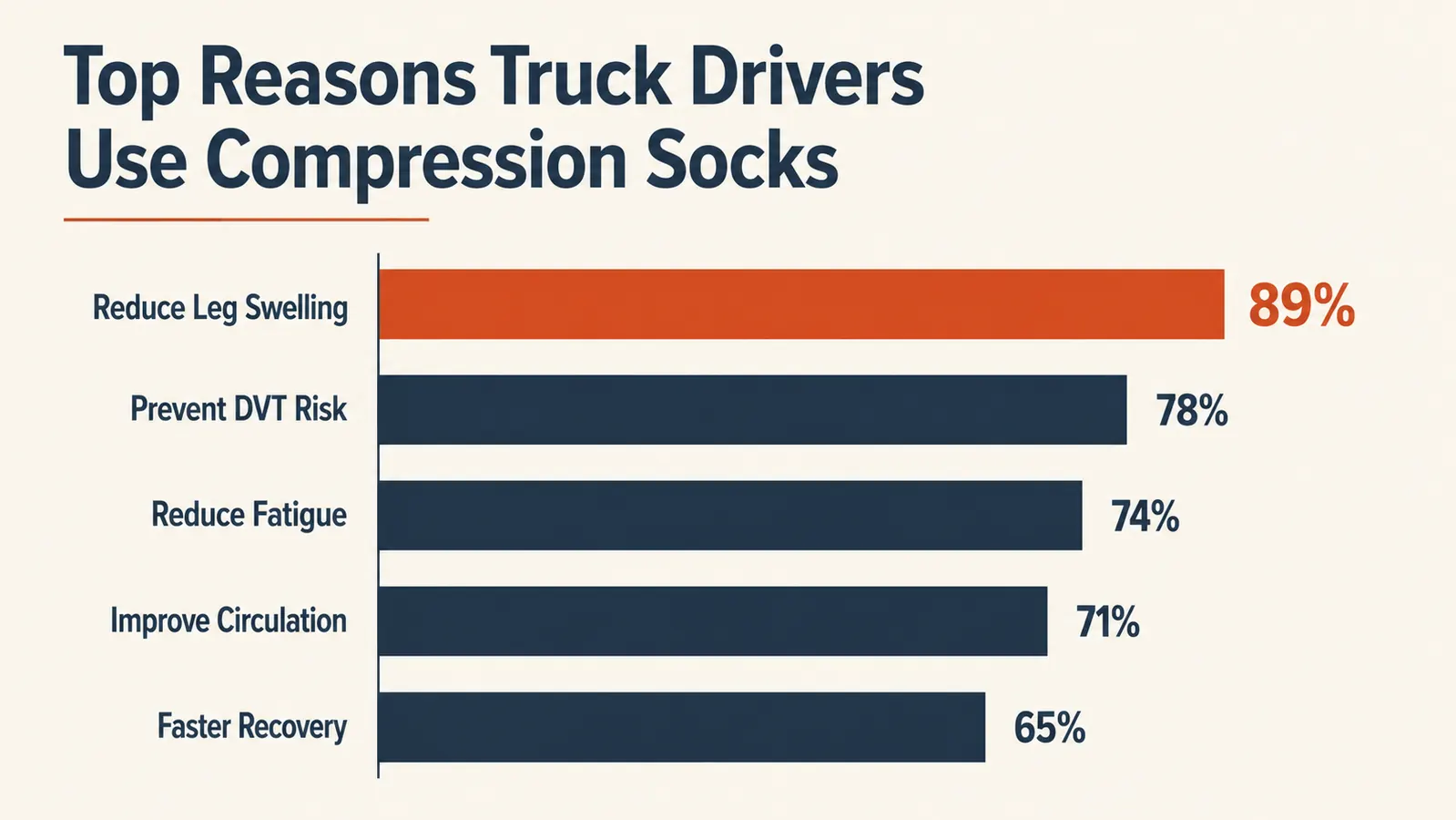
Edema, the medical word for that swollen-sausage-foot feeling, is almost universal in long-haul driving. The compression from a good pair of socks physically limits how much fluid can accumulate in the tissue around your ankles. I noticed after my first week with CHARMKING socks that my boots went on and came off normally at the end of a run, instead of feeling like I was peeling them off a log. It sounds minor until it becomes a daily thing.
They Lower Your Risk of Deep Vein Thrombosis
DVT is not a truck driver topic you hear a lot, but it should be. Prolonged sitting is one of the main risk factors for a blood clot forming in the deep veins of the leg. It happens to long-distance airplane passengers. It happens to truckers. Compression socks are a standard recommendation from physicians for exactly this reason, because keeping blood circulating actively is the simplest intervention available when you cannot get up and walk around. I am not a doctor and this is not medical advice, but the research behind it is solid and my own physician told me to wear them on any drive over four hours.
Your Legs Feel Less Tired at the End of a Run
Fatigue in your legs after a long haul is not just muscle soreness from walking. A lot of it is vascular, the result of blood pooling and poor circulation over ten or twelve hours. When I switched to wearing compression socks consistently, the heavy, worn-out feeling in my legs after a run went down noticeably. I am still tired at the end of a hard week, but my legs recover overnight instead of still feeling shot the next morning when I have to climb back in.
I got off a 14-hour push from Albuquerque to Amarillo and my ankles looked like I had stuffed oranges into my boots. That was the last time I drove without compression socks.
They Help With Plantar Fasciitis and Foot Arch Pain
A lot of truckers deal with foot arch pain from the constant pressure of operating pedals. The compression wraps around the heel and arch, giving it support similar to a low-grade orthotic. It is not a replacement for a real insole if you have serious plantar fasciitis, but it takes the edge off the aching in the heel and ball of the foot that builds up over a long shift. I run regular insoles in my boots and compression socks together, and that combination has been solid for me through about 120,000 miles over the last year and a half.
They Improve Sleep Quality in the Sleeper Berth
This one surprised me. When your circulation has been poor all day, your body keeps trying to sort it out overnight, which means your legs might feel restless or achy when you lie down. I started noticing that on nights I had worn my compression socks during the drive, I fell asleep faster and had fewer of those mid-sleep leg cramps that used to wake me up around 3 a.m. I take the socks off before bed, but the improved circulation I built up during the day seems to carry over.
They Hold Up to Real Road Life
I have tried cheap compression socks from gas stations and truck stop gift shops. They pill up, lose their elasticity after four or five washes, and the compression fades to nothing within a month. CHARMKING socks are still doing their job at 40 or 50 washes. The fabric stays put, the compression band at the ankle does not go slack, and the toe seam has not blown out on any of the three pairs in my current rotation. That is the baseline I need from anything I carry in the cab.
They Work With Boots, Not Just Athletic Shoes
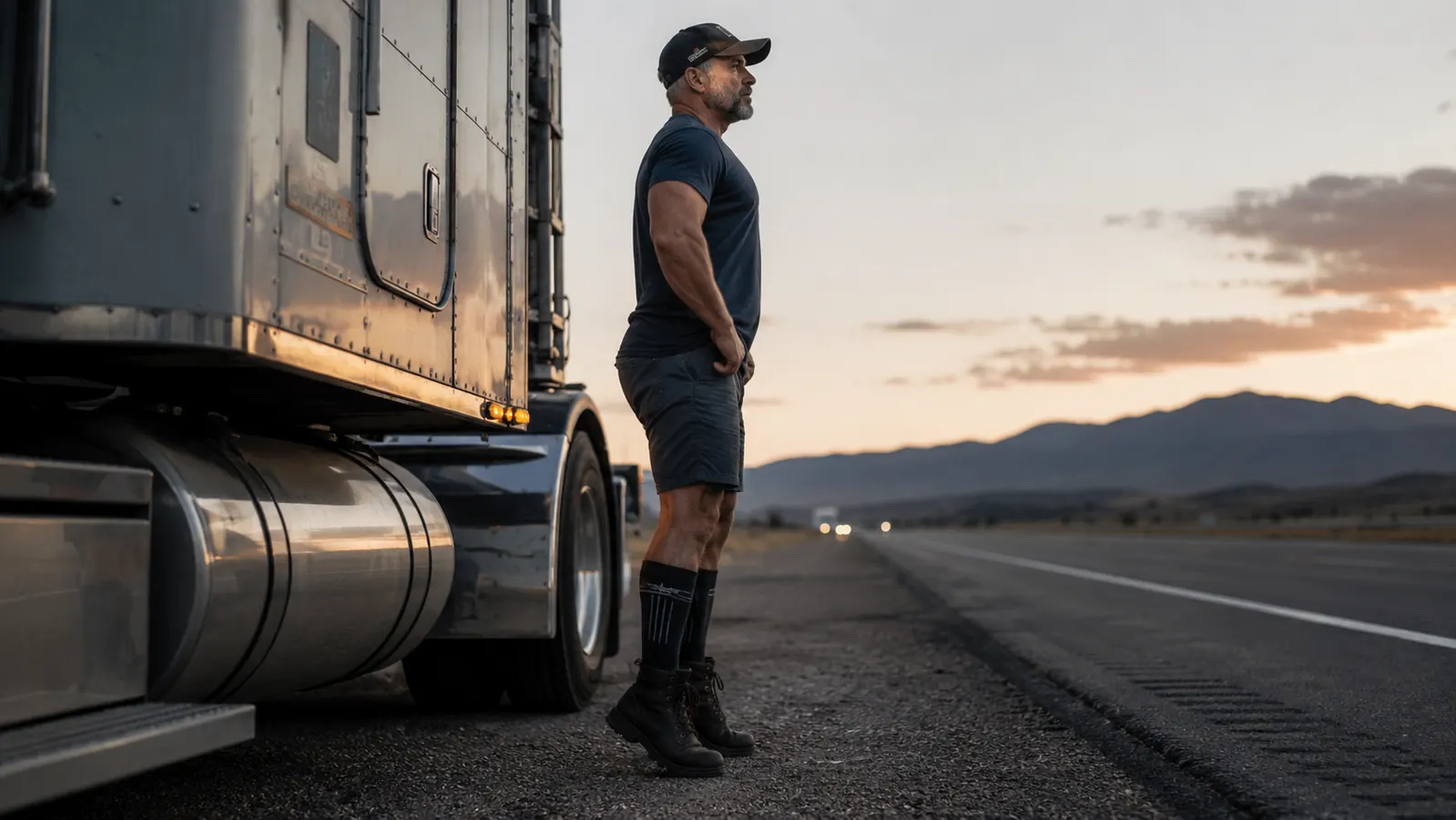
A lot of compression sock designs are built around athletic shoes with wide toe boxes. They bulk up too much under the tongue of a steel-toed work boot and cut into the top of your foot by hour three. The CHARMKING design is slim enough to layer under my standard work boots without any pressure issues. The sock itself sits snug but not tight at the toe, which matters when you are wearing the same footwear for fourteen hours straight.
They Cost Less Than a Co-Pay
I am not going to mention what I paid for mine. But I will say that a three-pair pack at the price these come in on Amazon costs less than one co-pay for a routine doctor visit. If you end up with a DVT or a serious edema problem, the cost of dealing with that medically is going to dwarf anything you spend on socks. That math makes compression socks one of the easiest cost-benefit calls I have made in years of equipping my cab.
They Are One Less Thing to Think About
The best cab gear is gear you stop thinking about. You put it on at the start of the run and forget it is there until you need it. These socks crossed that line for me around month two. I pull them on with my boots, get in the cab, and they just work in the background. I noticed their absence on a stretch in Oklahoma when I forgot to pack them for a three-day run and remembered what my legs used to feel like by Wednesday afternoon.
What I Would Skip
Skip anything claiming 30-40 mmHg compression if you do not have a documented medical condition that requires it. That level of compression is prescribed, not casual-use, and wearing it without a reason can restrict circulation instead of helping it. For driving, 15-20 mmHg is enough. Also skip the ultra-thin fashion compression socks sold in airport shops. They look like regular dress socks and have almost none of the structural integrity you need for a full day behind the wheel. Stick with socks designed for standing or travel use, where graduated compression is the whole point.
For over-the-road drivers, 15-20 mmHg compression is the sweet spot. Enough to move blood, not so much that it becomes a medical-grade issue.
If your legs ache, swell, or feel dead by the end of a long run, start here.
The CHARMKING compression socks have more than 89,000 reviews on Amazon, come in a 3-pair pack, and run at the 15-20 mmHg level that makes sense for driving. They wash well, they fit under work boots, and they hold up. If you want the full breakdown of how they perform over months of real road use, read the long-term review.
Amazon Check Today's Price on Amazon →