

I have been driving OTR for eleven years and I can tell you exactly when my legs started giving me trouble: the winter I started running the I-10 corridor full time, Jacksonville to Los Angeles, about 2,400 miles each way. CHARMKING compression socks were something my dispatcher's wife mentioned when I complained about the swelling at a company Christmas party. I figured I had nothing to lose on a three-pack that costs less than a tank of diesel at a Flying J. Six months later, I am still wearing them on every run. This review covers what actually happened, not what the marketing copy says.
The Quick Verdict
Solid graduated compression at a price that makes it easy to keep a fresh pair in every go-bag. The fabric softens after about 20 washes, but they still do the job.
Amazon Check Today's Price →Your ankles are probably swelling right now. Here's the fix I use on every run.
The CHARMKING three-pack is budget-friendly and gives you enough pairs to keep a clean set in the cab without doing laundry every two days. Over 89,000 Amazon reviews back this up.
Amazon Check Today's Price on Amazon →How I've Used Them
I put on the first pair the morning I left Tampa on a run to Phoenix. About 1,640 miles over two driving days. I went with the black ones in size Medium-Large, which fits my size 10.5 work boots. I wore them straight through from the Florida state line to the New Mexico border before I stopped to swap socks at a Pilot in Lordsburg. That is around 10 hours of continuous driving.
After that first run I kept a rotation going. I wore them on every shift over the next six months, which works out to somewhere between 15 and 20 wearing-and-washing cycles per pair. I run hot so I go through socks faster than most guys. I kept notes in my phone about what I noticed, mostly because I was genuinely curious whether these things would fall apart before winter or hold together. Short answer: they held together, mostly.
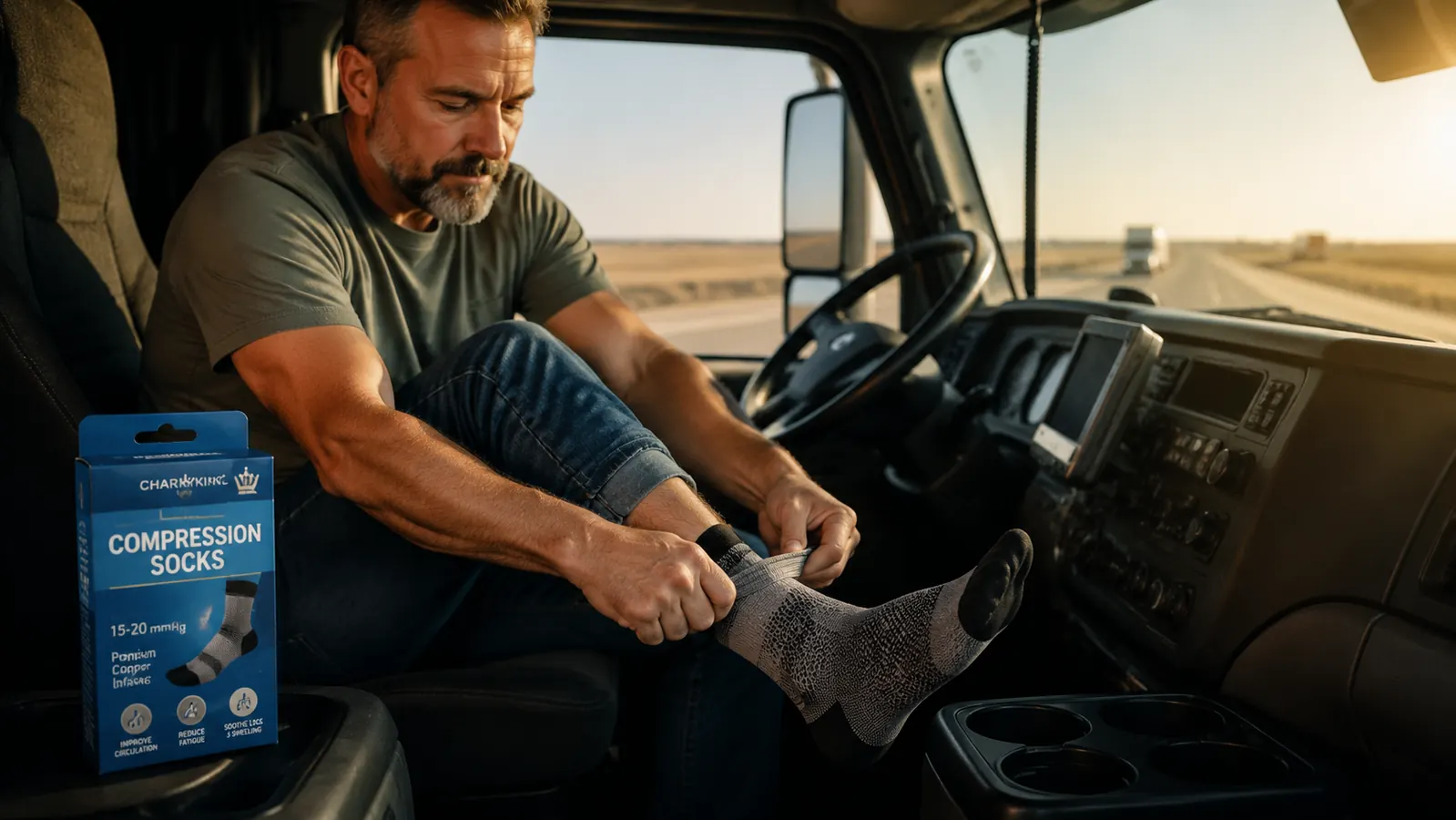
The 15-20 mmHg rating is what doctors call mild-to-moderate graduated compression. You feel the snuggest squeeze around the ankle and it eases off as it goes up toward the calf. That gradient is the whole point. It helps push blood back up toward the heart instead of letting it pool in your feet while you sit still for hours at a stretch. After three days of consecutive driving on a coast-to-coast run, that pooling is a real problem, not a minor inconvenience.
What the Compression Actually Does After a Long Shift
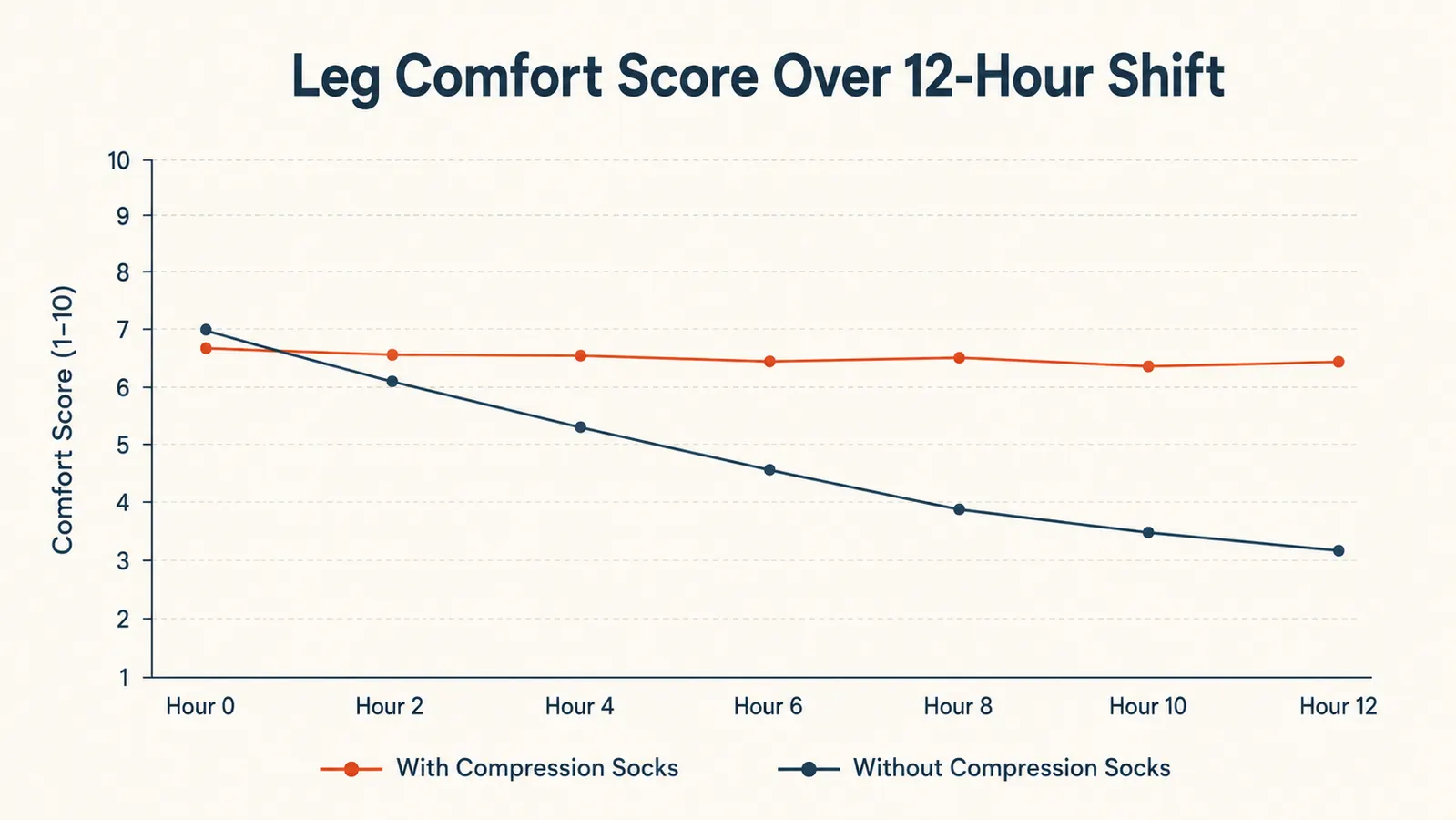
I am not going to pretend I measured my ankle circumference with a tape every morning and night. But I can tell you what I noticed after the first two weeks. On the days I forgot the socks, my ankles were noticeably thicker by the time I hit the scales at the end of a 600-mile day. Tight enough that getting my boots back on at a rest stop was a project. With the socks, that tightness was reduced. Not eliminated, but enough of a difference that I stopped forgetting them.
The other thing I noticed was leg fatigue. My legs just felt less beat up at the end of a long push. This is harder to quantify than ankle swelling, but the difference was real enough that my wife asked why I seemed less worn out after a week-long run. I told her it was the socks. She thought I was joking.
One more thing worth mentioning: I started wearing them on overnight layovers too, not just while driving. When you sleep in a bunk for 10 hours after a 600-mile push, your legs are still recovering from being in a static position all day. Keeping the socks on through the sleep cycle seemed to help me feel less stiff in the morning. I do not know the science on that, but I noticed it consistently enough that it became habit.
On the days I forgot the socks, getting my boots back on after a rest stop was a whole project. With them on, that barely happened.
Material and Construction: What You Are Actually Buying
The CHARMKING socks are a nylon and spandex blend, which is standard for graduated compression gear. The weave is tighter at the ankle and loosens incrementally up the calf. That construction is what creates the pressure gradient. If the sock were the same tightness all the way up, it would just be a tight sock, which is not the same thing and would not help your circulation.
What I noticed about the material is that it handles sweat better than cotton-blend socks. In summer heat, driving through Texas or Arizona with the AC fighting against it, cotton socks get soaked and stay that way for hours. These dry faster and they do not smell as bad at the end of a 10-hour stretch, which matters when you are climbing into a bunk in a small cab. I have tried a lot of socks over the years and moisture management in this price range is usually mediocre. CHARMKING is genuinely better than I expected.
One thing worth knowing: the reinforced heel and toe areas are noticeably thicker than the compression zone on the leg. This is good for durability but means these are not the thinnest sock in the world. If you are trying to fit them under tight safety boots, it can be a tight squeeze on some footwear. My work boots have enough room but I tried them once under a pair of waterproof hikers I have and it was too much material stacked up in the toe box.
Durability Over 6 Months: The Honest Count
I started with one three-pack and bought a second three-pack around month three because I wanted enough in rotation to always have a clean dry pair on hand. So I have been running six pairs total for this review period.
At six months, here is the state of things. Two pairs from the original pack are starting to show some pilling on the shin panel. The elastic at the ankle on one pair feels slightly less grippy than it did new. None of them have holes. The colors have faded a little from washing, going from a true black to a dark charcoal, which is what you expect from any dark garment washed regularly in hot loads. The socks from the second pack, with fewer washes on them, still look and feel close to new.
The compression does soften over time. The original three pairs do not feel quite as firm around the ankle as they did on day one. They are still functional and I am still wearing them, but if I compare them side by side with a pair from the second pack, the newer ones have a noticeably firmer grip. This is not unique to CHARMKING, it happens to all compression socks eventually, but it is worth knowing so you plan to replace them every six to nine months depending on wash frequency.
What We Liked
- Graduated compression that actually works for extended sitting and long driving shifts
- Three-pack price means you can afford to keep fresh pairs in rotation without worrying about cost
- Moisture-wicking blend handles sweat better than cotton in hot cabs and summer routes
- Reinforced heel and toe have held up through heavy daily use without holes or fraying
- 89,000-plus Amazon reviews covering nearly every body type, use case, and foot shape
- Machine washable without needing a laundry bag or cold-only wash cycle
Where It Falls Short
- Compression softens measurably after 20-plus washing cycles, especially around the ankle band
- Bulkier than thin dress socks, which can be tight under close-fitting safety or hiking boots
- Colors fade faster than I would like, going noticeably grayish after heavy washing
- Calf sizing can run short for people with wider than average calves, even in the larger size options
Sizing: What Nobody Tells You
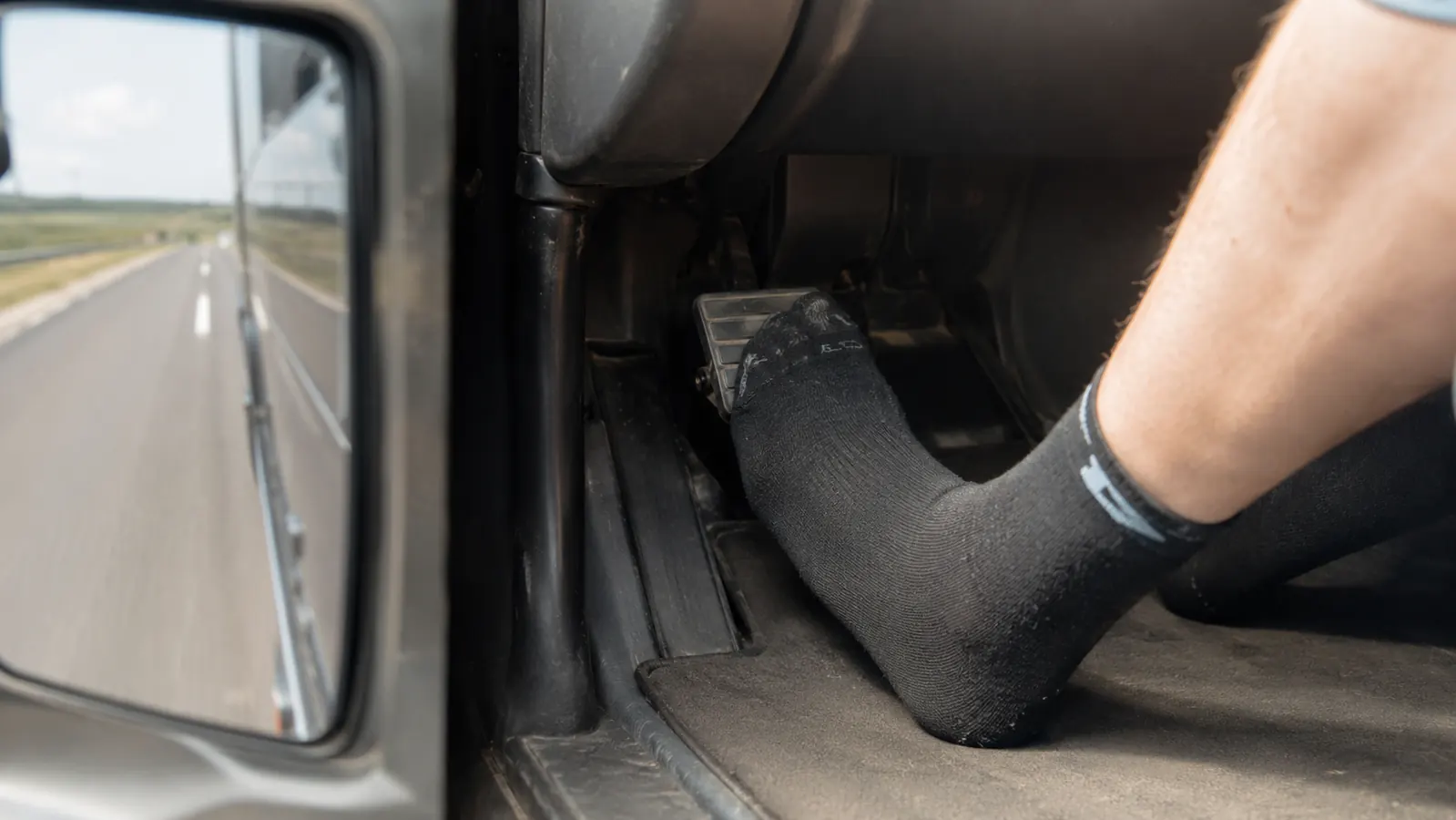
The size chart on the Amazon listing goes by shoe size, and for most people it tracks accurately. I wear a 10.5 and the Medium-Large fits me correctly in both the foot and the leg. Where the chart does not help you is calf circumference. If you have wide calves, the sock can feel tight above the compression zone in a way that creates a constriction effect rather than a gradient. I do not have this problem, but a driver I run with, a bigger guy at around 260 pounds, found the Large-XL was pulling in a way that left marks after 8 hours of driving. He switched to a different brand. Worth checking if you have any significant calf width before ordering a full rotation.
Alternatives I Considered
Before I landed on CHARMKING I looked at Sockwell and Physix Gear. Sockwell makes a solid graduated compression sock but they run significantly higher per pair. Physix Gear is in the same price range as CHARMKING and has a similar customer base of people who work on their feet or sit for long stretches. The main difference I noticed was that CHARMKING has a wider pattern and color selection if you need something presentable for off-the-road use, like if you stop somewhere and need to look a little sharper.
On pure compression function in the 15-20 mmHg range, the two brands are close enough that the price per pair and availability are what tip the decision. CHARMKING is consistently available in bulk, which matters when you want to buy six pairs at once and not piece them together from multiple orders.
One caution worth repeating: if your legs are in rough shape and a doctor has suggested 20-30 mmHg, these are not the right socks. That is a medical-grade compression level and you want something fitted for it specifically. CHARMKING's 15-20 mmHg is maintenance-level compression, which is appropriate for healthy people who sit for long stretches. It is not intended to treat active deep vein thrombosis or significant venous insufficiency. If you have those conditions, talk to a doctor before selecting any compression level.
Who This Is For
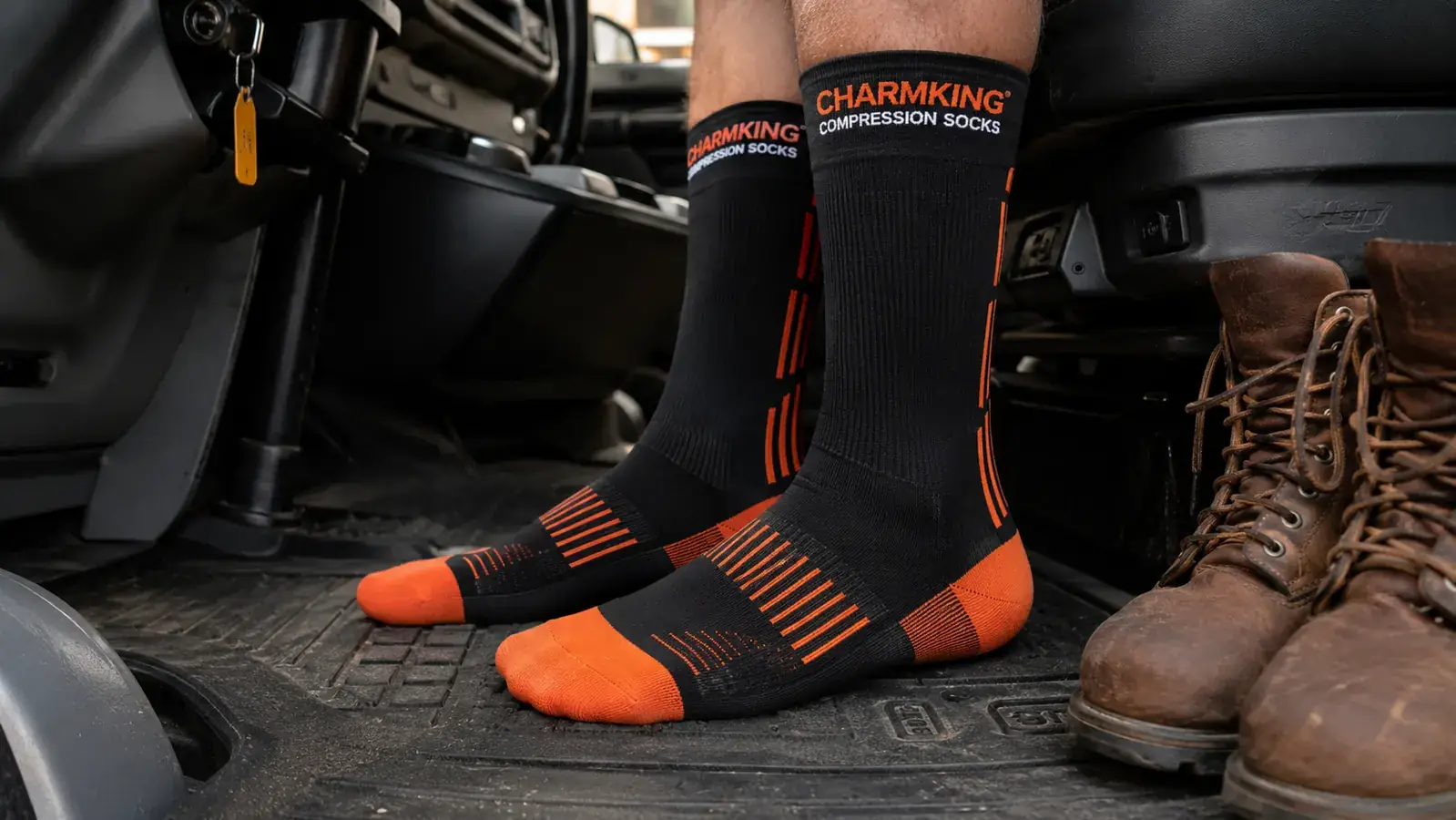
If you drive OTR, sit at a desk for most of the day, or spend long stretches in a plane or car and your legs and ankles feel heavy and tired by the end of it, these socks are a straightforward fix worth trying. The cost of one three-pack is low enough that you will know within two or three shifts whether they make a difference for you. Most people feel it within the first week. The relief is not dramatic, it is subtle, but it adds up over a year of runs and prevents the kind of chronic swelling that starts to cause real problems if you ignore it long enough.
Who Should Skip It
Skip these if you need higher medical-grade compression as directed by a physician, if you have wide calves that fall outside the standard sizing, or if you are expecting a no-maintenance lifetime sock. They are not that. They are a working person's consumable that does the job well for six to nine months per pair before the compression starts to back off meaningfully. If you expect a sock to last three years, you will be disappointed. If you view them as something you replace roughly once or twice a year depending on how hard you run them, they are worth every dollar. You can find out whether they are right for you on your very next shift.
Six months in, I am still reordering these. That is about as honest a recommendation as I can give.
The three-pack format makes rotating pairs easy. Grab a couple of packs so you always have a fresh dry set ready without waiting on laundry day at a truck stop.
Amazon Check Today's Price on Amazon →