
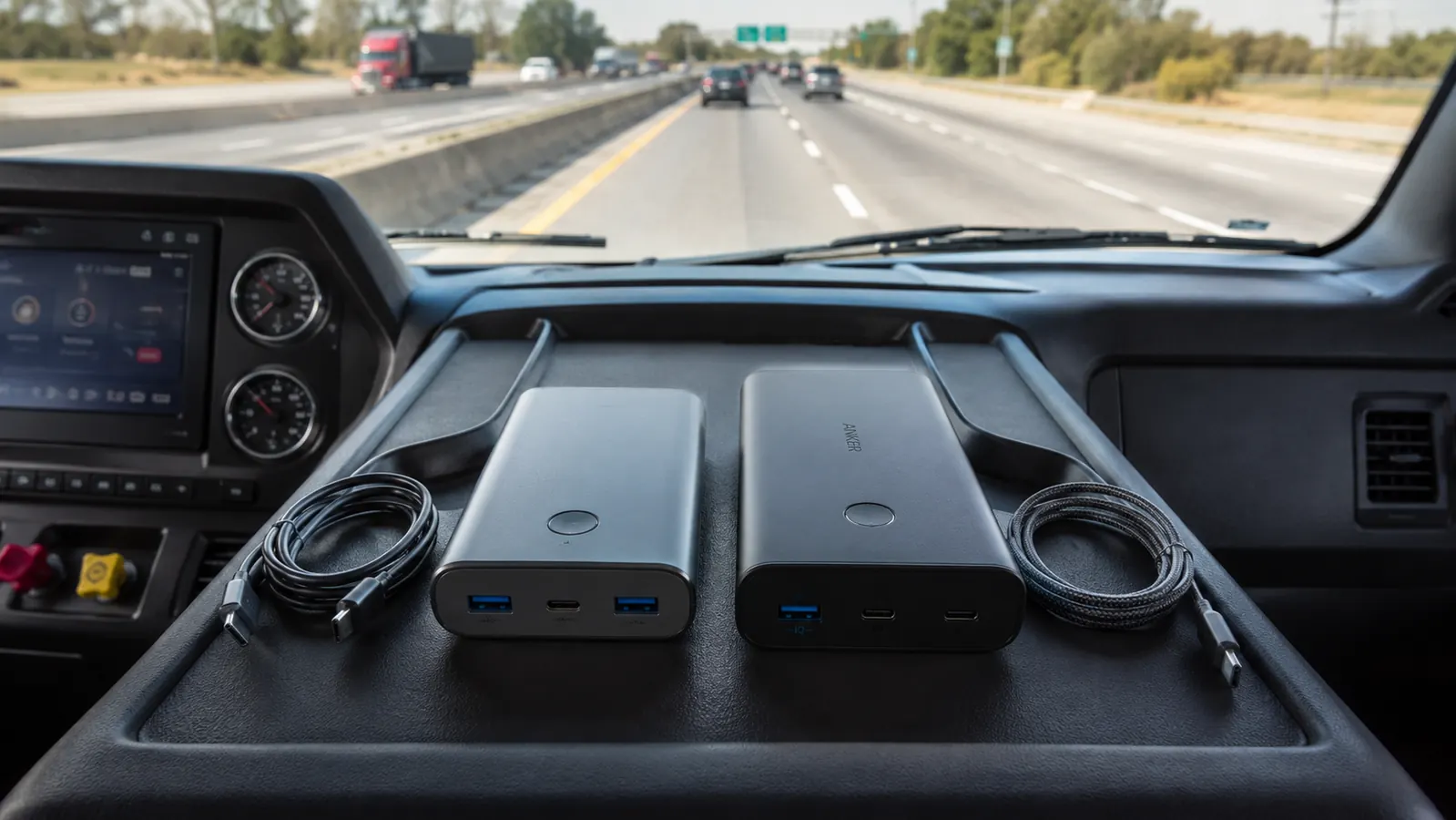
When I am running a route from Nashville to Phoenix, the Anker Zolo 20,000mAh power bank is one of the three things I never leave the yard without. My phone handles GPS and dispatch messages. My tablet runs Spotify and audiobooks through the night. My dashcam logs everything. If any one of them dies somewhere on I-40 through New Mexico with no Flying J in sight, I am in a genuinely bad position. That is the real-world frame for this comparison: not which bank looks better on a specs sheet, but which one I would trust when I am two days from a wall outlet and every device I own is draining faster than expected.
The Baseus PicoGo is the other bank I have had in my hands long enough to form an honest opinion. It shows up constantly in travel gear roundups, it is priced right, and it has a solid reputation among weekend travelers and commuters. But popular and road-tested are two different standards. I ran both banks back to back across consecutive long-haul runs and paid attention to the things that matter when you are depending on a power bank instead of just hoping you find an outlet.
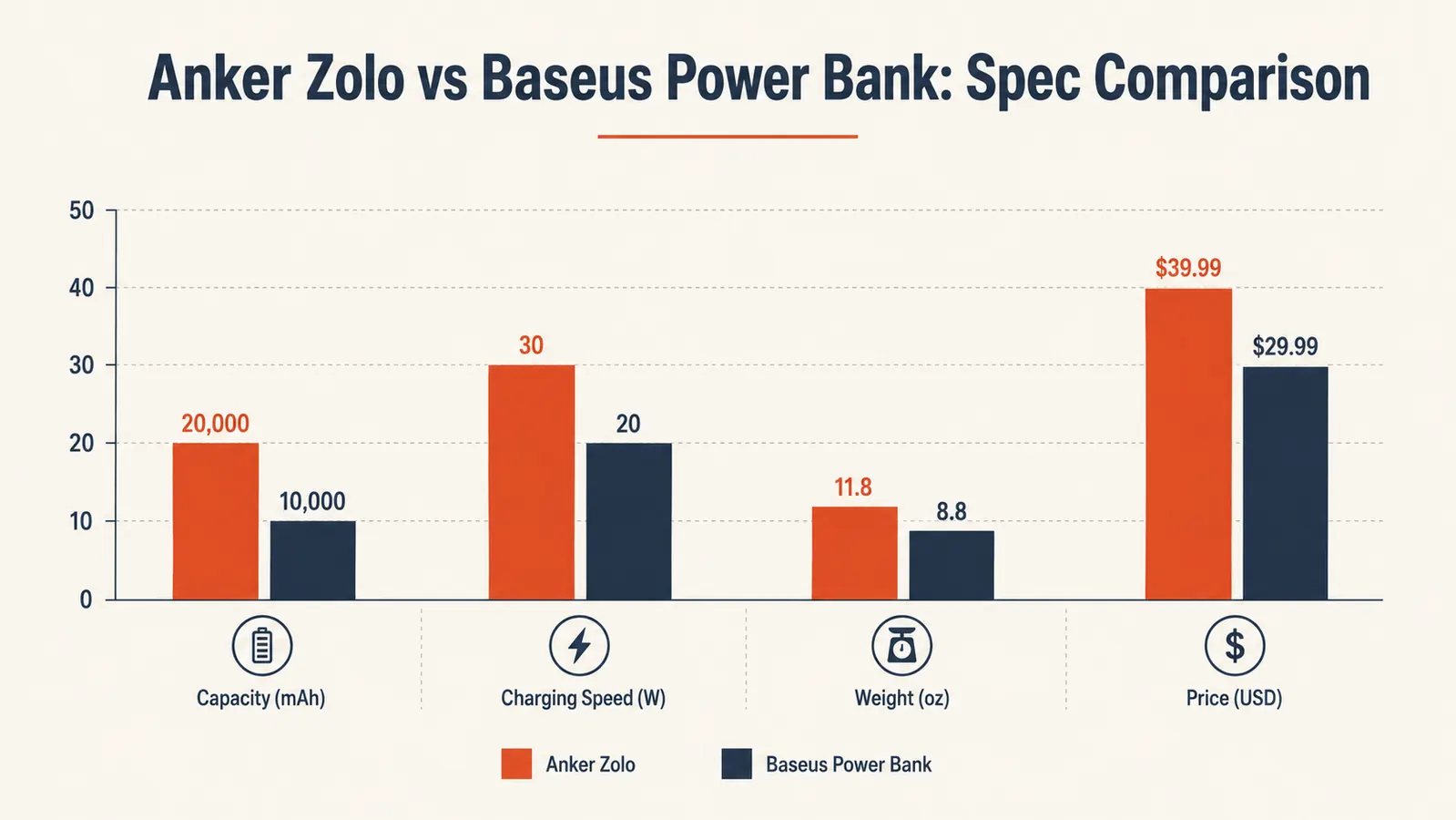
| Anker Zolo | Baseus Power Bank | |
|---|---|---|
| Capacity | 20,000mAh | 10,000mAh |
| Max Output Wattage | 30W USB-C | 20W USB-C |
| Built-in Cable | Yes, integrated USB-C | No, requires separate cable |
| Weight | 14.4 oz (408g) | 7.2 oz (204g) |
| Ports | 2x USB-A, 1x USB-C | 1x USB-A, 1x USB-C |
| Recharge Time (full) | Approx. 4.5 hrs at 30W input | Approx. 2 hrs at 20W input |
| Price Tier | Mid-range | Budget to mid-range |
| Warranty | 18-month Anker warranty | 12-month Baseus warranty |
Where the Anker Zolo Wins
Capacity is the headline number, and for long-haul travel it matters more than almost any other spec. Twenty thousand milliamp-hours gives me roughly four to five full charges on my iPhone, two full charges on my Samsung tablet, and still has reserve left for my Bluetooth headset. On a recent Memphis to Albuquerque run, I tracked three full phone charges, got my tablet to 80 percent twice, and the bank was still showing one bar of charge remaining when I pulled into the terminal. That kind of reserve is what separates a power bank that handles a day trip from one that handles an actual road haul.
The built-in USB-C cable is the feature that sounds minor in the listing until you have fumbled around a dark cab at 2am looking for a cable that is not knotted around the parking brake handle. The Anker Zolo's integrated cable flips out cleanly from a recessed slot on the side of the unit. It is short enough to stay tidy when stowed and long enough to reach my phone in the cup holder mount without pulling taut. After six months of daily use, there is no fraying at the connection point, no loosening of the swivel joint, and no signal drop. That is a better durability record than most separate braided cables I have bought from accessory brands. The 30-watt output through that same cable pushes my phone from dead to 60 percent in about 45 minutes, which means a 30-minute fuel stop actually makes a noticeable difference to my battery level before I roll.
The three-port layout completes the case for the Anker. Two USB-A outputs plus the USB-C lets me charge my phone, tablet, and dashcam battery simultaneously without carrying a travel hub. On overnight stops where I want everything topped off before I roll again, I plug all three in before I sleep and wake up to a full setup. The 18-month warranty is also a meaningful edge. Anker's support team has a real reputation for honoring their warranty without requiring you to fight for it. That matters on gear I am depending on professionally, not just recreationally.
Running GPS, phone, and dashcam? The Anker Zolo is built for exactly that.
20,000mAh capacity, built-in USB-C cable that actually lasts, 30W fast output, and three ports for the full cab setup. Over 25,000 reviews from people who depend on it, not just test it once.
Amazon Check Today's Price on Amazon →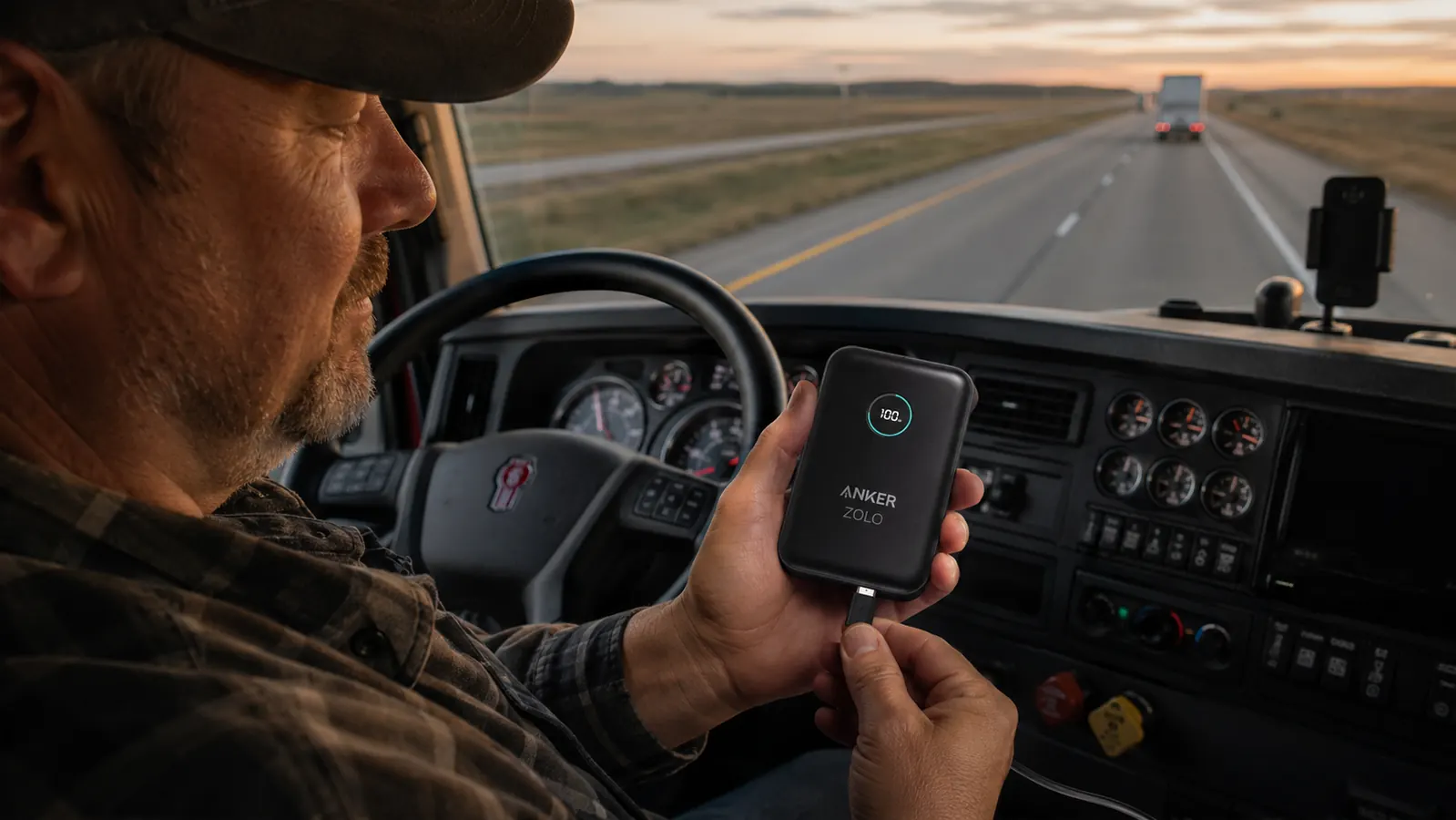
Where the Baseus PicoGo Wins
The Baseus cuts the weight almost in half. At around seven ounces, it fits in a jacket pocket without pulling anything down, and if you are packing light for a day trip or a single overnight, that weight difference is real and noticeable. It also recharges from dead faster, because a smaller tank fills in less time. If you have access to a hotel outlet or a truck stop with an interior charging lounge, you can get the Baseus back to full in roughly two hours compared to four-plus for the Anker. For someone whose trips are measured in hours, not days, that refill speed means you rarely go into a trip with a depleted bank.
The Baseus PicoGo also lands at a lower price point, which makes it an easier call if you are buying a backup bank to keep in a bag you do not always take out of the car, or if you are outfitting multiple people. For day-trippers, commuters, and anyone who spends most nights in a room with an outlet, the Baseus is a capable, compact option. The question you have to answer honestly is whether you ever find yourself more than one day from reliable power, because once you are there, lighter does not help.
The Baseus is a smart bank for day trippers. But when I am two days from a wall outlet with every device in the cab draining, I want the Anker in my bag, not something that weighs three ounces less.
Durability: How Both Banks Handle the Realities of Road Life
Power banks take more abuse in a truck cab than most reviews account for. They get wedged between the seat and the center console. They rattle around on the dash over potholed state routes. They sit in a hot cab on a July afternoon in West Texas and in a freezing parking lot in January outside Chicago. The Anker Zolo has a rubberized texture on both end caps and a matte finish on the body that grips rather than slides and does not show scratches the way glossy plastic does. After six months of that treatment, the exterior shows minor scuffing but the unit functions identically to day one. No loose ports, no swollen cell, no heat issues even in high ambient temperature conditions.
The Baseus PicoGo has a smoother, more uniform finish that looks cleaner out of the box but picks up visible scratches faster in daily carry. That is a cosmetic concern more than a functional one, but if you are running a piece of gear through years of road use rather than keeping it in a case, the texture difference does reflect a broader difference in build philosophy. Both banks have performed reliably in my use without electrical issues, but the Anker reads like something built to survive, where the Baseus reads like something built to impress on a shelf.

What the Specs Do Not Tell You
A 20,000mAh rating does not mean you get 20,000mAh of usable output. Conversion loss is a real factor, typically in the 15 to 20 percent range depending on the bank's circuitry and the output wattage you are drawing. That puts the Anker's actual usable capacity closer to 16,000 to 17,000 milliamp-hours. The same math applies to the Baseus: a 10,000mAh rating nets you around 8,000 to 8,500 usable milliamp-hours in practice. On a multi-day run where I am relying on the bank as my only power source, the Anker's larger reserve is the only reason I am not rationing screen time and turning my tablet brightness down by day two.
Fast charging is also device-dependent. The Anker Zolo's 30W USB-C output is useful when your phone and tablet support it, which most devices made after 2021 do. If you are charging an older device with a lower input ceiling, you will draw less than the full 30W, but you will not damage anything. The Baseus 20W ceiling is adequate for most phones but noticeably slower on tablets and meaningless for laptops, which need 45W or more to actually charge under load. If you want a bank that works across your phone, tablet, and a thin laptop in a pinch, the Anker's 30W output is the only reason to consider it a laptop-compatible option at all.
There is also the question of output sharing. When both banks are running multiple devices simultaneously, output is split across active ports and total wattage delivered to each device drops. The Anker's higher peak wattage means even split across three ports, each device gets a faster trickle than the Baseus can manage across two. On a full overnight charge with everything plugged in, that difference rarely matters. During a short stop where you want to bank as many percentage points as possible in 20 minutes, it does.
Who Should Buy Which
If you spend multiple consecutive days away from reliable wall outlets, whether in a truck cab, on back-to-back travel days, or camping in areas without hookups, the Anker Zolo is the right call. The capacity covers what you actually need across two full days of active device use. The built-in cable removes the one thing that always seems to go missing at the wrong time. The three-port setup handles the real cab scenario where multiple devices need power simultaneously. The 30W speed makes fuel stop charging count for something real.
If your travel pattern is mostly day trips or single overnights in hotels and motels, and you care about packing the lightest bag possible, the Baseus PicoGo is a reasonable choice. You will not find yourself short on a normal travel day. Just be honest with yourself about how often your plans extend, your outlets disappear, or your run goes long, because that is exactly when the Anker's extra capacity pays for itself in a way that is very hard to argue with.
I have used both. The Baseus lives in my personal bag for city day trips when I know I will be back in a room by evening. The Anker Zolo goes in the cab for every actual haul, without exception. When I am loading the truck at 4am for a two-day run to Denver, I am not reaching for the lighter option. I am reaching for the one I know will still have juice when I am pulling into the Colorado state line with my GPS on its last bar. That is the Anker.
The Anker Zolo is the bank I reach for before every long run.
Built-in USB-C cable, 30W fast charge, 20,000mAh of real-world reserve, and an 18-month warranty Anker actually honors. If your gear needs to stay alive across multiple days on the road, this is the bank to have.
Amazon Check Today's Price on Amazon →