
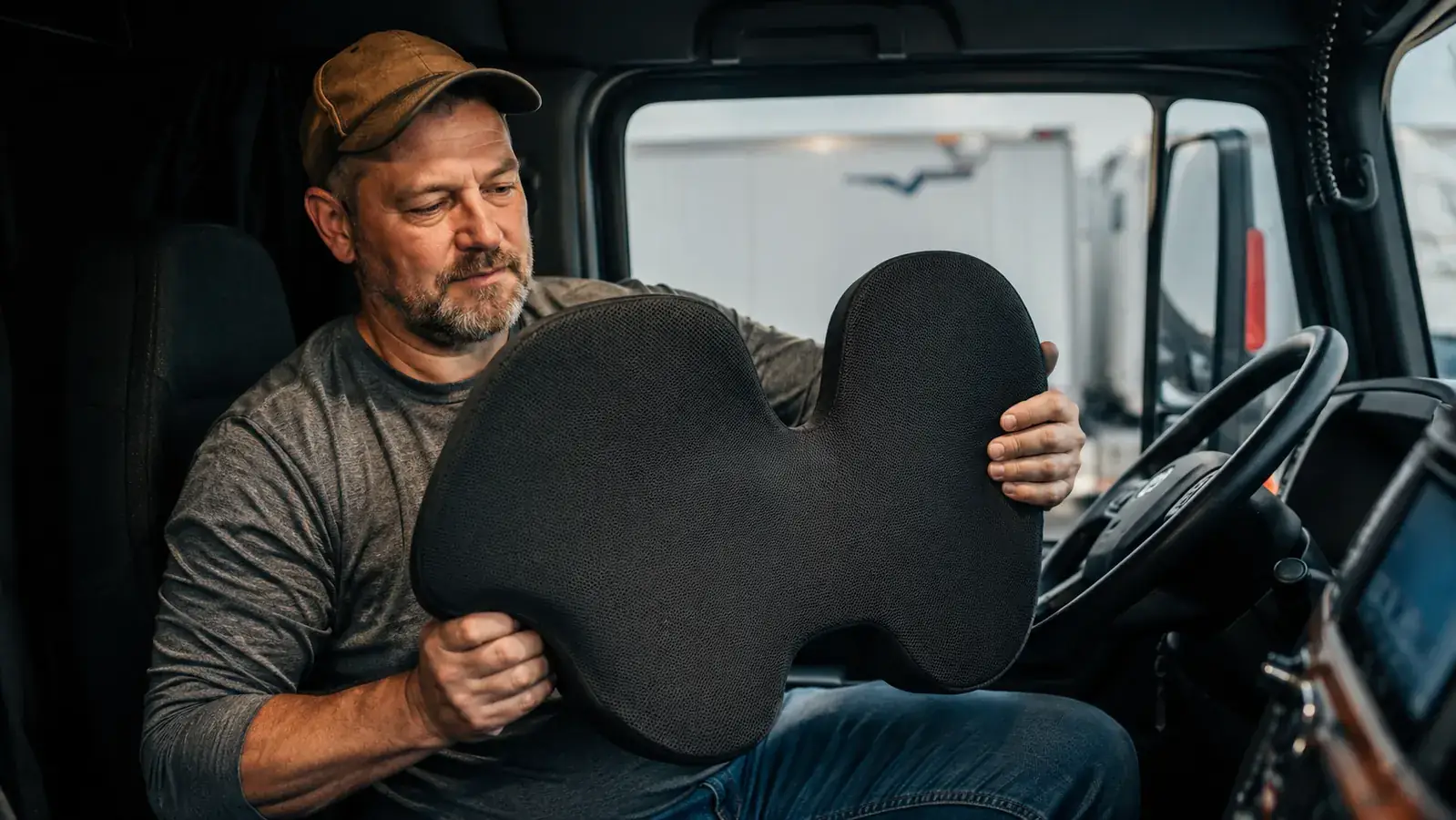
I want to be straight with you about something. When I first put the Everlasting Comfort memory foam seat cushion on my truck seat, I expected a rough break-in period followed by years of solid support. That is not exactly how it went. The cushion does things the listing does not prepare you for -- and a few of those things matter a lot if you are running 600-plus miles a day in a cab with a low roof.
I have been hauling freight for 11 years. My route is mostly I-40 and I-70, a lot of flat Midwest miles where you are just sitting. My lower back started giving me trouble in year six and I have tried everything from lumbar rolls to those pricey orthopedic wedge cushions. The Everlasting Comfort cushion cost me a modest amount and has over 120,000 reviews. That number made me think most of the surprises were already documented. Some of them were. Some of them were not.
The Quick Verdict
Solid coccyx relief and a fair price, but it raises you two inches, runs hot in summer, and the cover pills faster than it should. Know those tradeoffs before you order.
Amazon Check Today's Price →If your back hurts on every run, this cushion addresses the right problem -- just read what I learned first.
The Everlasting Comfort seat cushion is a legitimate coccyx offloading cushion with real memory foam. Check the current price on Amazon before deciding.
Amazon Check Today's Price on Amazon →How I Tested It -- and Why My Situation Is Different From Most Reviews
Most of the reviews you will find for this cushion are from office workers sitting in ergonomic desk chairs eight hours a day. That is a controlled environment. Consistent temperature, upholstered seat, fixed posture. I was sitting in the cab of a 2019 Freightliner Cascadia, which has a factory air-ride seat that already sits about 19 inches from the floor to the cushion surface. The cab headroom is tight -- about 48 inches from seat to ceiling. Adding two inches of foam changes things.
I ran the Everlasting Comfort cushion for five months on regular hauls -- mostly solo, two to three runs per week averaging 580 miles each. I kept it on the seat year-round, which means it went through the dead of a Kansas winter and two months of July and August heat. Those seasonal conditions told me things that a one-week review cannot.
I also washed the cover three times over those five months. I want to talk about that separately because it matters more than I thought it would.
Surprise No. 1: The Foam Is Firmer Than You Expect
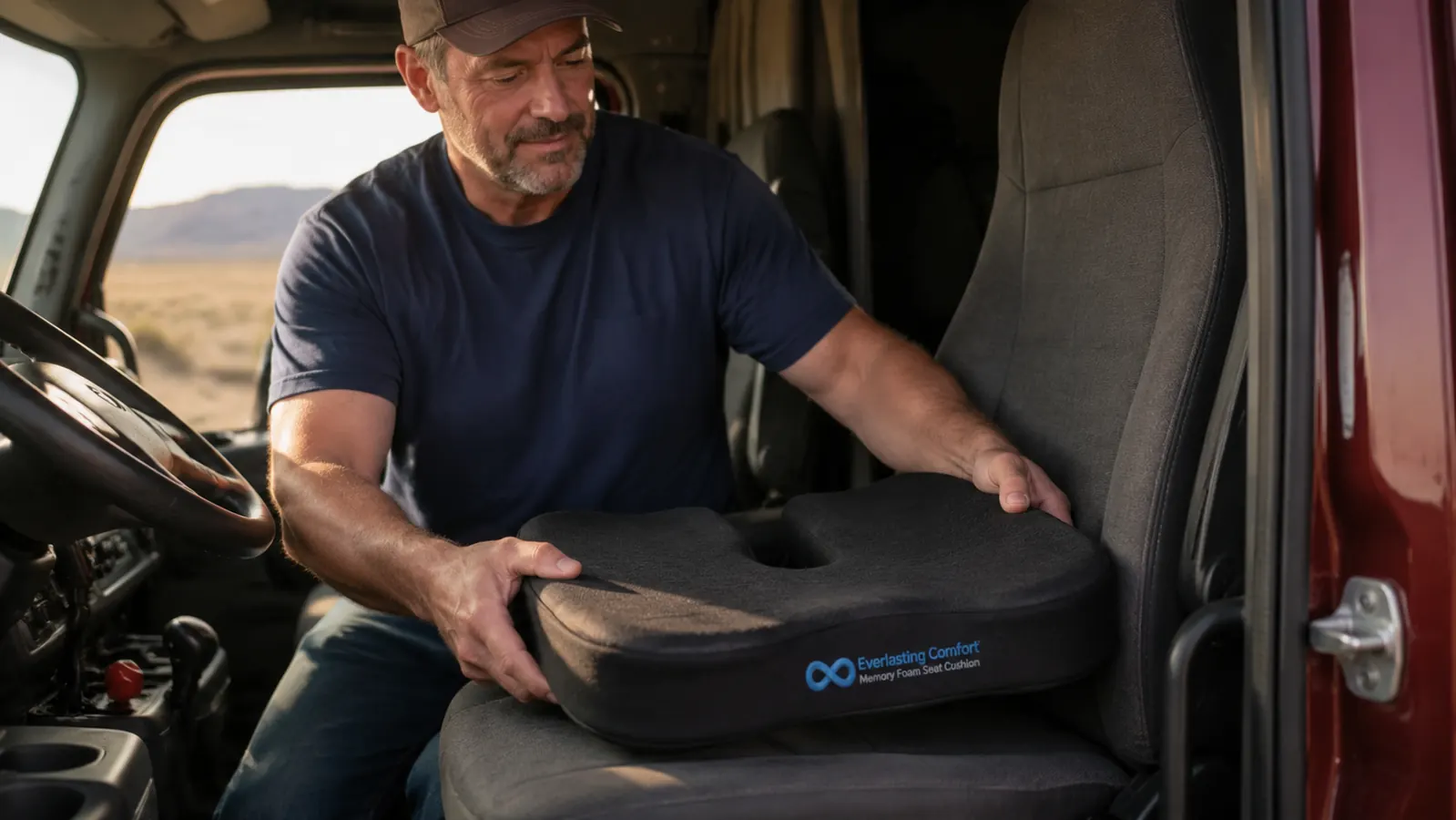
The product page uses the word 'plush.' I would not use that word. When the cushion arrived, it had been compressed in shipping and the first thing I noticed was that unboxing it felt like prying a hockey puck out of a bag. It took about 24 hours to fully expand to its stated 3.5-inch thickness. Even fully expanded, the foam density is on the firm side of medium. This is not a soft sink-in cushion.
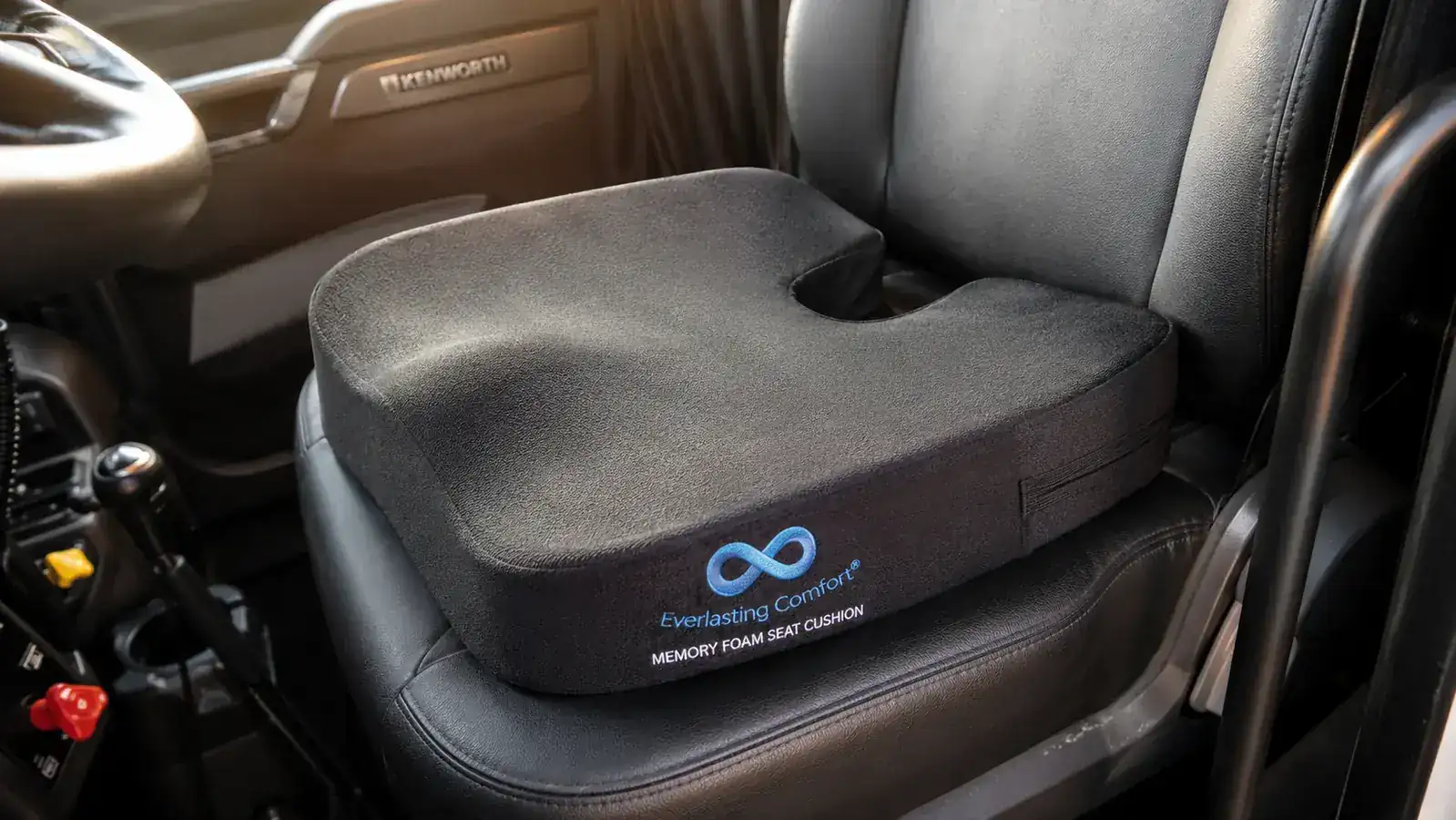
Whether that is a problem depends on what you need. If you have coccyx pain -- tailbone pain from sitting too hard on a factory seat -- the firm-but-yielding feel is actually correct. The U-shaped cutout at the back of the cushion takes weight off the tailbone entirely. That part works. But if you were expecting something that feels like a pillow-top mattress, you will be disappointed in the first five minutes.
By the third month, I started noticing the foam felt more forgiving in the center. That is where body weight concentrates. I pressed a thumb into the foam on day one versus month three and the compression depth had increased noticeably. Not collapsed -- it still felt like foam, not a flat pad -- but the initial resistance was gone. If you are a heavier driver, say 230 pounds or more, that compression timeline is probably faster.
The cushion does not feel the same at month three as it did at unboxing. The foam gives a little more in the center, the support is softer. That is not failure -- it is physics. But you should know it is coming.
Surprise No. 2: Two Inches Matters in a Tight Cab
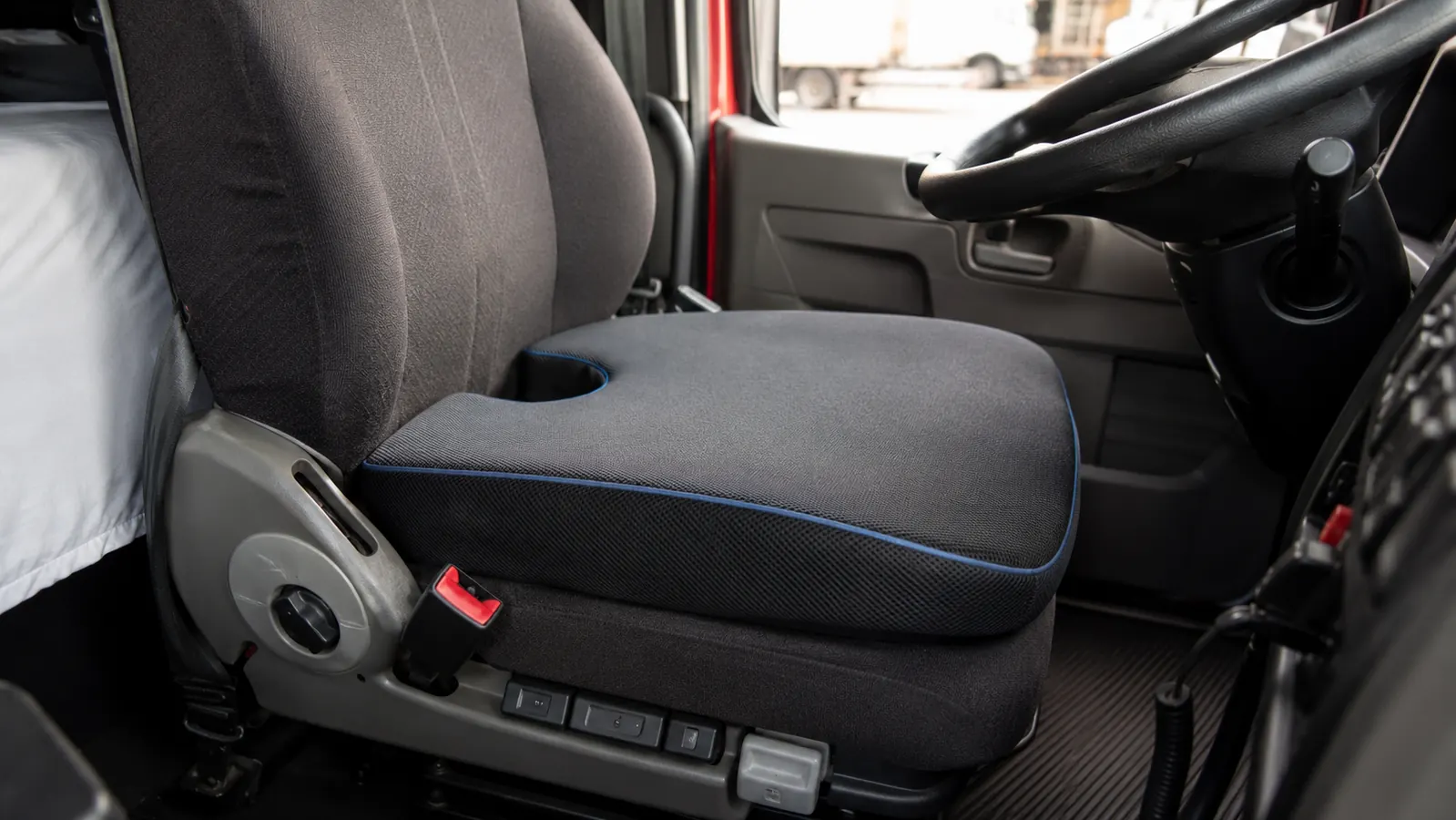
This one is not in any review I read before buying. The Everlasting Comfort cushion adds roughly two inches of height. In a car or SUV with generous headroom, or in an office chair with height adjustment, you account for it in ten seconds. In a truck cab with a low ceiling and a seat already close to the roof, you are now craning your neck slightly on every highway bridge that makes you flinch.
More practically, I had to drop my air-ride seat to its lowest position. My sightline through the windshield changed. The sun visor no longer covered the full glare angle in the late afternoon. I spent about a week recalibrating my mirror positions. None of this is catastrophic but it is real, and it is something a truck driver needs to know that an office worker reviewing the same product would never encounter.
If you drive a cab-over truck or any cab with less than 48 inches of headroom, try this cushion on a short run before committing to it for a long haul. The repositioning takes adjustment time, and doing that adjustment while running night miles on a deadline is not the way to do it.
Surprise No. 3: Heat Retention in Summer Is Real
Memory foam traps heat. Every memory foam product does this to some degree. The Everlasting Comfort cushion has a velour-style cover that feels comfortable in winter and becomes a problem in July. My cab runs at 72 degrees with the HVAC going, and after two hours of a summer run I was noticeably warmer at the seat contact points than I was without the cushion.
The listing mentions a breathable cover. I would say the cover is thinner than a fully upholstered cushion, but it is not actively ventilated. There are no gel inserts, no perforations in the foam, no airflow channel design. If heat retention bothers you when you drive -- and it bothers a lot of truckers who sit in sun-facing cabs most of the afternoon -- this is a genuine tradeoff, not a minor footnote.
I managed it by sitting on a thin cotton t-shirt between my jeans and the cushion on hot runs. Inelegant but effective. Worth knowing before your first July haul with this thing.
Surprise No. 4: The Cover Pills and the Non-Slip Bottom Has Limits
The cover is the weakest part of this product. After the first wash, small pills appeared on the surface -- the kind you see on a worn fleece jacket. After the third wash, there were enough of them that the seat surface felt noticeably rougher against the back of my thighs through fabric. The cover does come off and is machine washable, but it was not designed for repeated washing cycles. If hygiene matters to you on a multi-week run, plan for the cover to look worn by month two.
The non-slip rubber bottom also surprised me. On the cloth-upholstered factory seat in my Freightliner, it grips fine. But when I borrowed another driver's rig for two days -- a Pete 579 with a vinyl-covered seat -- the cushion slid forward every time I braked hard. The rubber grips texture on fabric but not on smooth vinyl. If your seat surface is vinyl or leather, add a non-slip mat underneath or expect to reset the cushion position every hour.
What We Liked
- Coccyx cutout design genuinely offloads tailbone pressure -- felt the difference in the first week
- Dense enough foam to hold shape under sustained weight for several months
- Cover unzips and machine washes -- more than most foam cushions offer
- Affordable relative to specialized truck-seat inserts that cost twice as much
- Lightweight and easy to move between vehicles when you swap rigs
Where It Falls Short
- Adds two full inches of height -- a real problem in low-headroom cabs
- Foam is firmer than 'plush' language suggests -- expect a break-in period
- Heat retention is noticeable in summer; no gel layer or ventilation channel
- Cover pills after two to three washes -- surface feels rougher over time
- Non-slip bottom grips fabric seats but slides on vinyl or leather surfaces
- Center foam compresses measurably by month three under heavy daily use
What the Listing Does Not Tell You About the U-Cutout Design
The U-shaped coccyx cutout is the main selling point of this cushion, and it is the one feature that consistently works as advertised. The cutout creates a gap under the tailbone so your coccyx is suspended in air rather than bearing weight. If you have been hauling for years and your tailbone aches by mile 300, that gap changes the feel of a long day meaningfully.
What the listing does not tell you is that the cutout placement assumes a specific sitting position. If you shift around a lot -- and most drivers do after hour six -- the cutout can end up under the wrong part of your anatomy and you lose the benefit. I found I had to be deliberate about how I sat down each time I got behind the wheel. The cushion works best when you back up to the seat edge first, sit down into it, then slide back. It takes a few days to build the habit.
For reference, I weigh 185 pounds and have mild lumbar disc compression diagnosed about three years ago. The cushion helped with tailbone pressure and took some load off my lower back on runs under 400 miles. On 600-mile days I still finished stiff, but less stiff than without it.
Who This Is For
You will get the most out of this cushion if you drive a vehicle with at least average headroom and a fabric or cloth seat surface. Car commuters, van drivers, and SUV travelers will find the fit straightforward. Truckers with air-ride seats that have good height adjustment range can make it work, but factor in the repositioning time. Anyone dealing with tailbone pain from a factory seat that is too firm will feel an improvement in the first week. The price is low enough that it is worth trying even if you end up returning it.
Who Should Skip It
If your cab ceiling is already close to your head, do not buy this cushion without measuring first. Two inches is more than it sounds when you are in the same seat for ten hours. If you run in extreme summer heat without good cab AC, the heat retention will bother you more than it helped with back comfort. If you are a heavier driver and you are looking for a cushion that will hold its firmness for a year or more, I would look at something with a higher-density foam rating -- something marketed specifically for commercial vehicle use, not a product split between office chairs and car seats. And if your seat is vinyl, budget a few extra dollars for a non-slip base layer.
For a deeper look at how this cushion compares to the ComfiLife option on foam density and cover washability, the side-by-side breakdown at the Everlasting Comfort vs ComfiLife comparison covers it. And if back pain is a bigger issue you are working through, the guide on preventing back pain on long hauls looks at the full picture beyond just the seat cushion.
Still the right call for tailbone pain at a fair price -- if you go in with the right expectations.
The Everlasting Comfort cushion does what it promises for coccyx offloading. It is not perfect for every cab setup, but at this price it is worth trying. Check the current price and read the recent reviews to see if the cover quality has improved in newer production runs.
Amazon Check Today's Price on Amazon →