
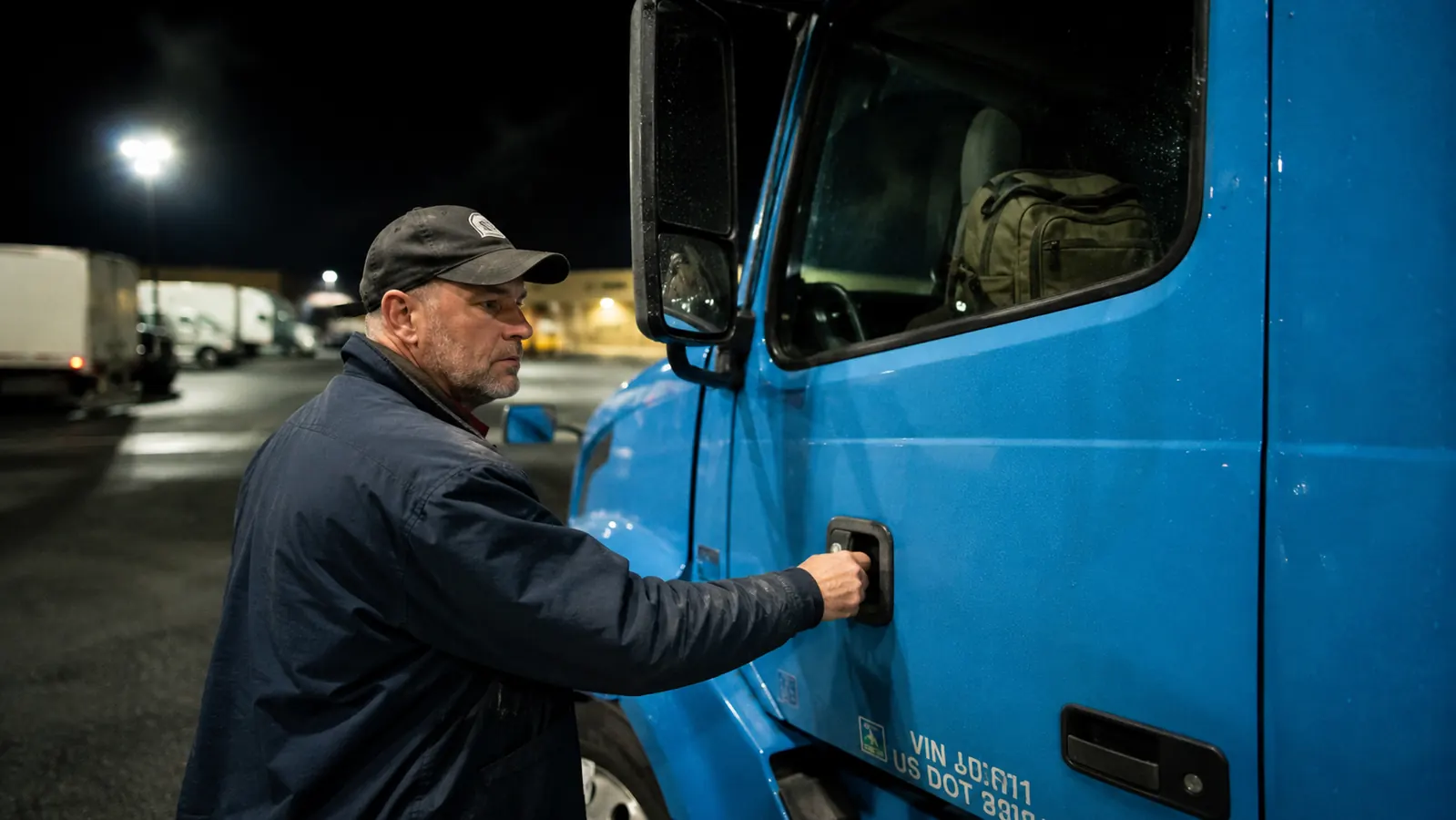
I run about 120,000 miles a year, and the Tzowla anti-theft backpack has been on my passenger seat for most of them. I got serious about securing my gear at truck stops after a driver in my company got his laptop taken right out of a Pilot Flying J in Amarillo while he was in the shower. Took maybe four minutes. He had left his bag in an unlocked cab, but that is not the only mistake you can make at a stop. There are five specific things I do now every time I park, and they have kept me clean across three years of overnight stops at busy terminals and rural rest areas alike.
Truck stops and interstate rest areas are high-opportunity theft zones. Foot traffic is constant and anonymous. People come and go at all hours. A lot of drivers leave their cab for twenty minutes to shower, eat, or sleep without locking their bag inside a secure container. That gap is all it takes. This guide covers the five steps I run through every time I stop, starting with the gear that makes the system work and ending with the habits that most drivers skip.
Your cab gear is only as safe as the bag holding it.
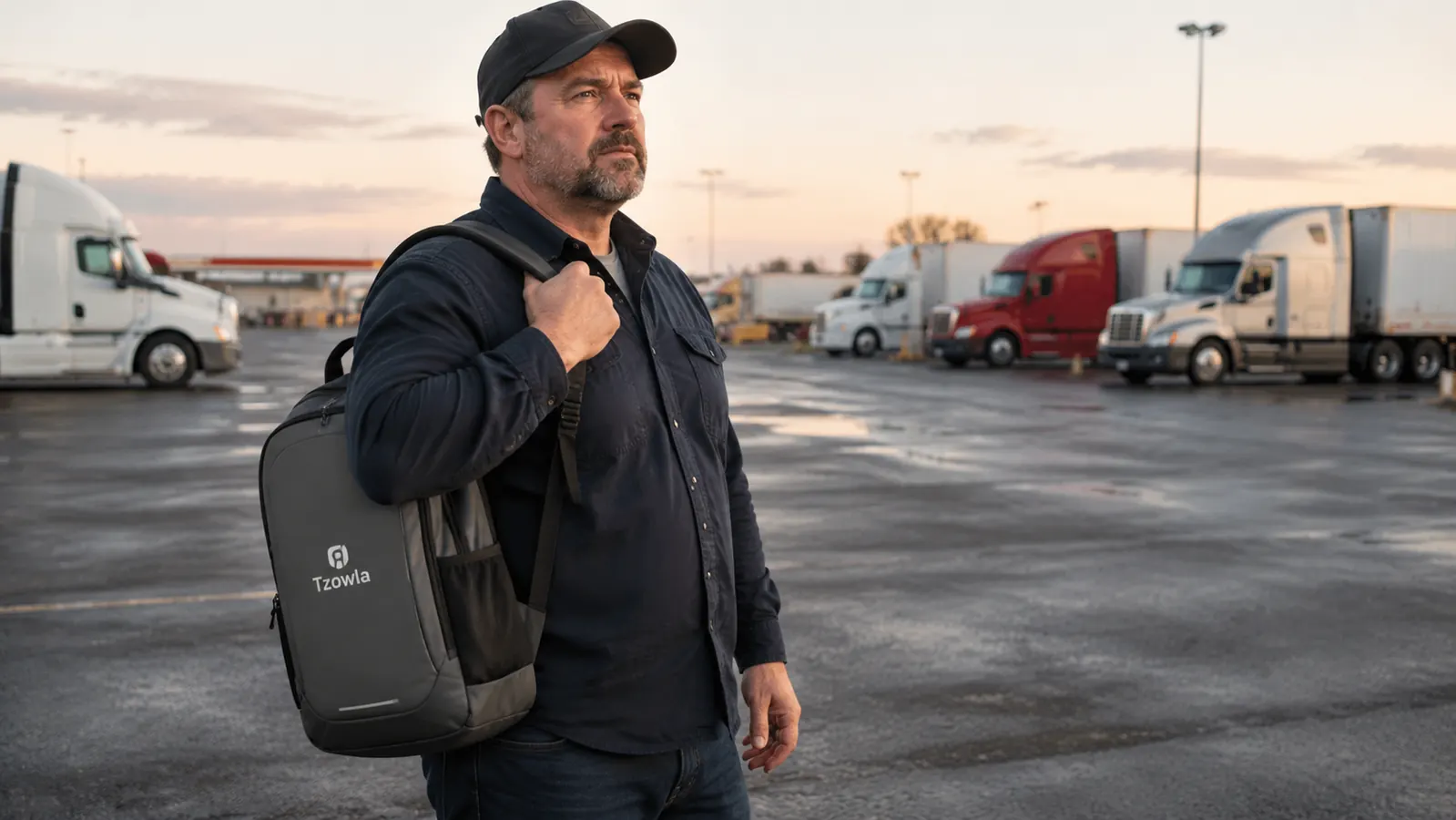
The Tzowla anti-theft travel backpack has a hidden back-panel zipper, reinforced straps, and a built-in lock port. It is what I use every run, and it is the foundation of the system in this guide.
Amazon Check Today's Price on Amazon →Step 1: Choose a Bag That Fights Back on Its Own
The biggest security mistake I see drivers make is treating their bag as a neutral container. A regular zip-top backpack with external pockets gives an opportunist a fast, quiet entry point. They do not need to slash anything or make noise. They just walk by, unzip the side pocket, and keep moving. I have seen it happen at an Iowa 80 food court and I know drivers who lost phones that way at a Love's in Memphis.
The Tzowla backpack solves the access problem with a design choice most bags skip: the main compartment zipper is on the back panel, against your spine, not facing out. To get into the main compartment someone has to get behind you or get the bag off your body entirely. That is a completely different level of commitment than a fast unzip and grab. The outer pockets still zip normally, but those are where I keep low-value items anyway.
The bag also has reinforced shoulder straps with cut-resistant lining. Slash-and-run is less common than pocket dipping, but when you are walking through a busy truck stop at 2 AM with a laptop inside, the reinforcement matters. Pick a bag with at least one of these active security features before you think about anything else. The rest of this system assumes you have a bag that is worth locking in the first place.
See my full breakdown of why the Tzowla earns its place in any road warrior's kit: Tzowla Travel Backpack Review: 6 Months of Truck Stops and Layovers.
Step 2: Lock the Zippers Before You Walk Away from Your Cab
I carry two TSA-approved combination locks on every run. They cost a few dollars each, weigh almost nothing, and live clipped to a D-ring inside my bag when I am not using them. When I step out of the cab for any reason, those locks go through the zipper pulls on the main compartment and on the laptop sleeve before I set the bag down anywhere.
The Tzowla has dedicated lock loops built into the zipper pulls for exactly this purpose. You do not have to thread the lock body through a narrow pull and fight with the hardware. The loop is wide enough to work with most standard travel locks, including the Master Lock 4688D and the Forge TSA models. I prefer three-digit over four-digit locks at stops because I can work the combination faster when I am tired and my hands are cold.
A locked zipper does not make the bag impossible to open. Anyone with a pen tip can pop a zipper coil if they want. What locks do is slow the interaction down and signal that this bag is not the easy target. Opportunists do not want friction. They want the bag that looks like it will open in two seconds. A visible lock is often enough to make them move on to something else in the parking lot.
Step 3: Position the Bag Where It Cannot Be Grabbed Quickly
Positioning matters as much as the hardware. I never leave my bag on the passenger seat where it is visible through the window. If I am sleeping in the cab, the bag goes under the bunk or wedged behind the seat. If I am leaving the cab, it comes with me on my back or goes in the sleeper compartment with the door locked.
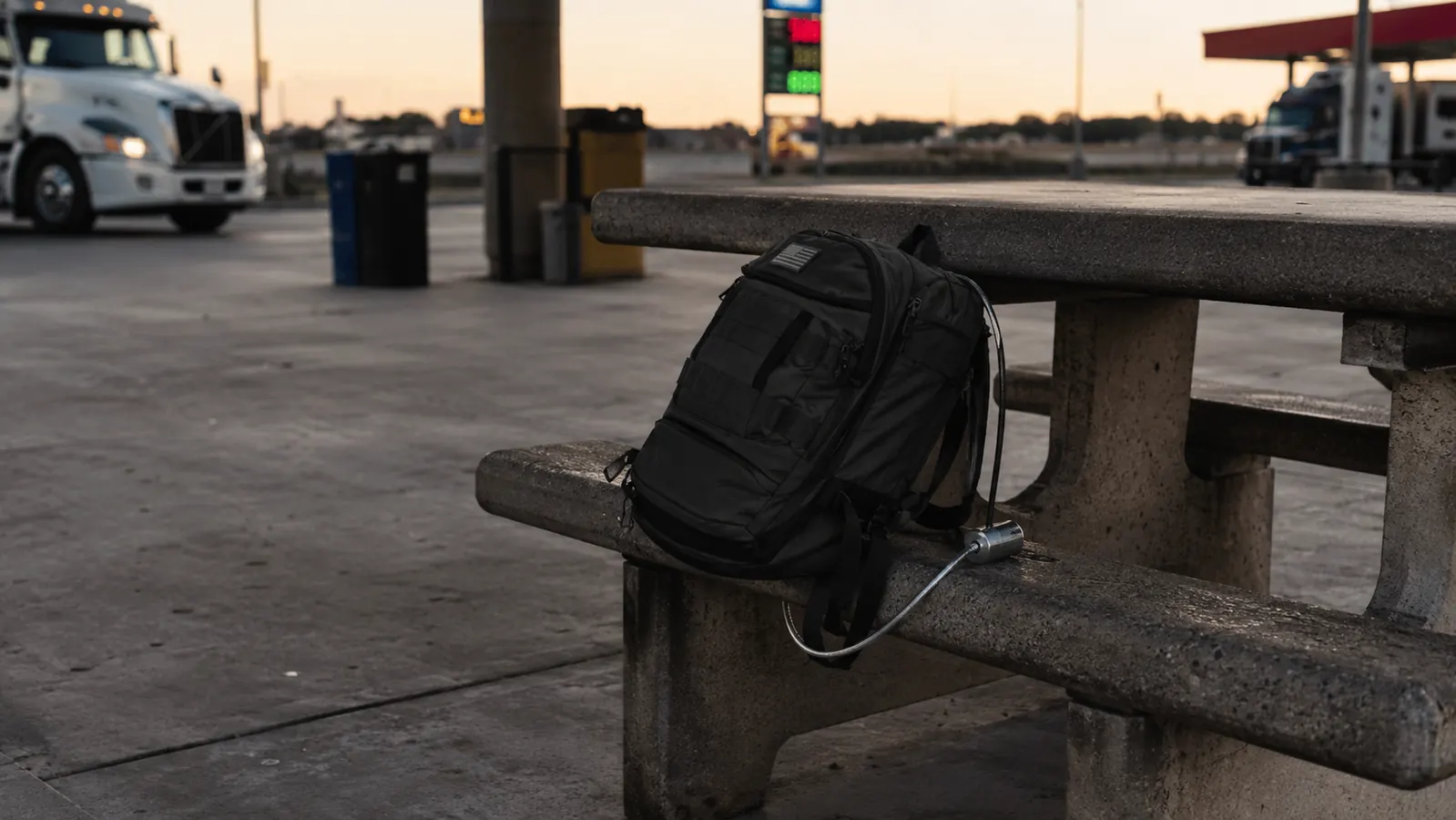
When I am inside the truck stop showering or eating, the bag stays on my person or gets locked to something fixed. The Tzowla has an internal cable loop that you can thread a TSA-approved cable lock through, then anchor to a luggage rack, a bench leg, or a locker door hook. At Pilot and Love's locations that have locker banks, I always use one of the coin lockers for my bag when I shower. Four quarters for twenty minutes of peace of mind is an easy trade.
At smaller rural rest areas without facilities, the bag never leaves my cab unlocked. I treat those stops the same way I treat any overnight: bag in the sleeper, cab doors locked, cab curtains closed. Visibility is half the battle. If someone cannot see a bag on your seat, they have no reason to try your door.
Opportunists do not want friction. They want the bag that looks like it will open in two seconds. A visible lock and a hidden zipper panel change that calculation fast.
Step 4: Distribute Your Valuables Across the Bag's Layers
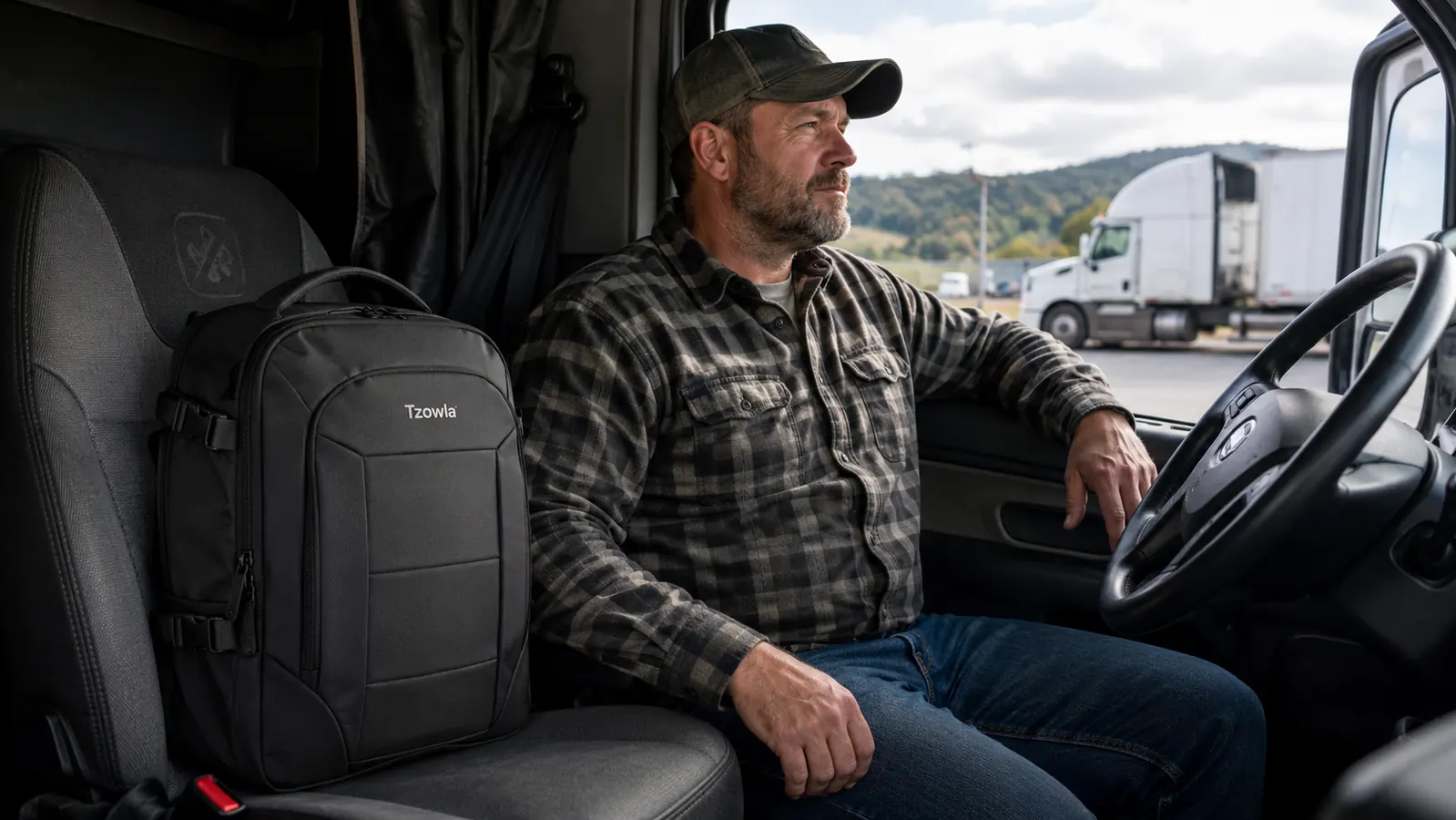
Even with the right bag and locks, you can make a thief's job easier by loading all your valuables into one accessible spot. I treat the Tzowla's compartments the same way I treat my cab's storage: organized by access risk. High-value items go deepest. Low-value, convenience items go where they are easy to reach.
In practice that means: laptop and power bank in the hidden back-panel main compartment, always locked. Phone, wallet, and keys in the front internal organizer pocket that is inside the main compartment. Snacks, a charger cable, and a spare mask go in the external zipper pocket on the front. If someone does manage to get into the outer pocket, they get a protein bar and a USB-A cable. That is fine.
I also keep a separate small wallet with a day's worth of cash and a single card in my front pants pocket whenever I am inside a busy stop. I do not walk around a truck stop with my main wallet in my back pocket. That habit costs me nothing and has saved me from a couple of close calls over the years at crowded fuel islands.
Step 5: Build a Departure Checklist You Run Every Single Time
The stops where things go wrong are not the sketchy ones at 2 AM. They are the ones at 10 AM at a clean, busy Flying J where you feel completely relaxed. You get comfortable, you skip a step, and that is when something walks away. The fix is a departure checklist you run the same way every time, no matter how tired or rushed you are.
My checklist is three things: locks threaded and set, bag on my back or anchored if I am leaving it, cab doors locked with windows up. I say it out loud when I get out of the cab, every stop, no exceptions. It takes about four seconds and it has kept me consistent across three years of stops in forty-six states. Routines do not feel necessary until the one time you skip them.
Some drivers add a fourth step: a quick photo of their bag placement on their phone before they walk away. If something goes missing later, you have a timestamped reference for the insurance claim and a clear record of what was in the bag. I have not needed that step yet, but it is a smart addition for anyone running expensive electronics on the road.
What Else Helps
The five steps above cover the core system, but a few supporting habits sharpen the edges. First, know which truck stops have active security. Pilot Flying J locations at major interchange hubs tend to have better lighting and some camera coverage in the parking lot. Smaller independent stops vary a lot. When I pull into an unfamiliar stop at night, I park near the building and under a light if I can. Dark, isolated spots between rigs are where fast thefts happen with no witnesses.
Second, be aware of your surroundings when you are loading or unloading your bag at the cab. Opportunists watch to see what goes in and out of your rig. If someone is loitering near your truck while you dig through your bag, close the door, take note, and consider moving. That is not paranoia. That is the same situational awareness you use on the road every day.
Third, register your electronics. A laptop, tablet, or power bank with a registered serial number is easier to flag at a pawn shop and sometimes recoverable. It takes five minutes per device and costs nothing. Most theft at truck stops is opportunistic and local. Registered gear sometimes finds its way back.
Fourth, talk to other drivers. The trucking community is better at sharing stop-specific intel than any app. If you hear that a particular rest area on I-40 or I-80 has had a string of incidents, you route around it or you stay sharp when you stop there. Other drivers are the best early-warning system you have.
If you want a deeper look at why the Tzowla earns its spot as the anti-theft foundation for this system, I have a full breakdown at 10 Reasons an Anti-Theft Backpack Is Non-Negotiable for Road Warriors. That article covers the specific features that matter for long-haul use versus bags marketed at weekend travelers.
If your current bag has no lock port and no hidden panel, you are one busy truck stop away from a problem.
The Tzowla anti-theft travel backpack is the cornerstone of the system in this guide: back-panel hidden zipper, cut-resistant straps, internal cable anchor, and built-in lock loops. Over 53,000 reviews back it up. Check today's price before you head out on your next run.
Amazon Check Today's Price on Amazon →