
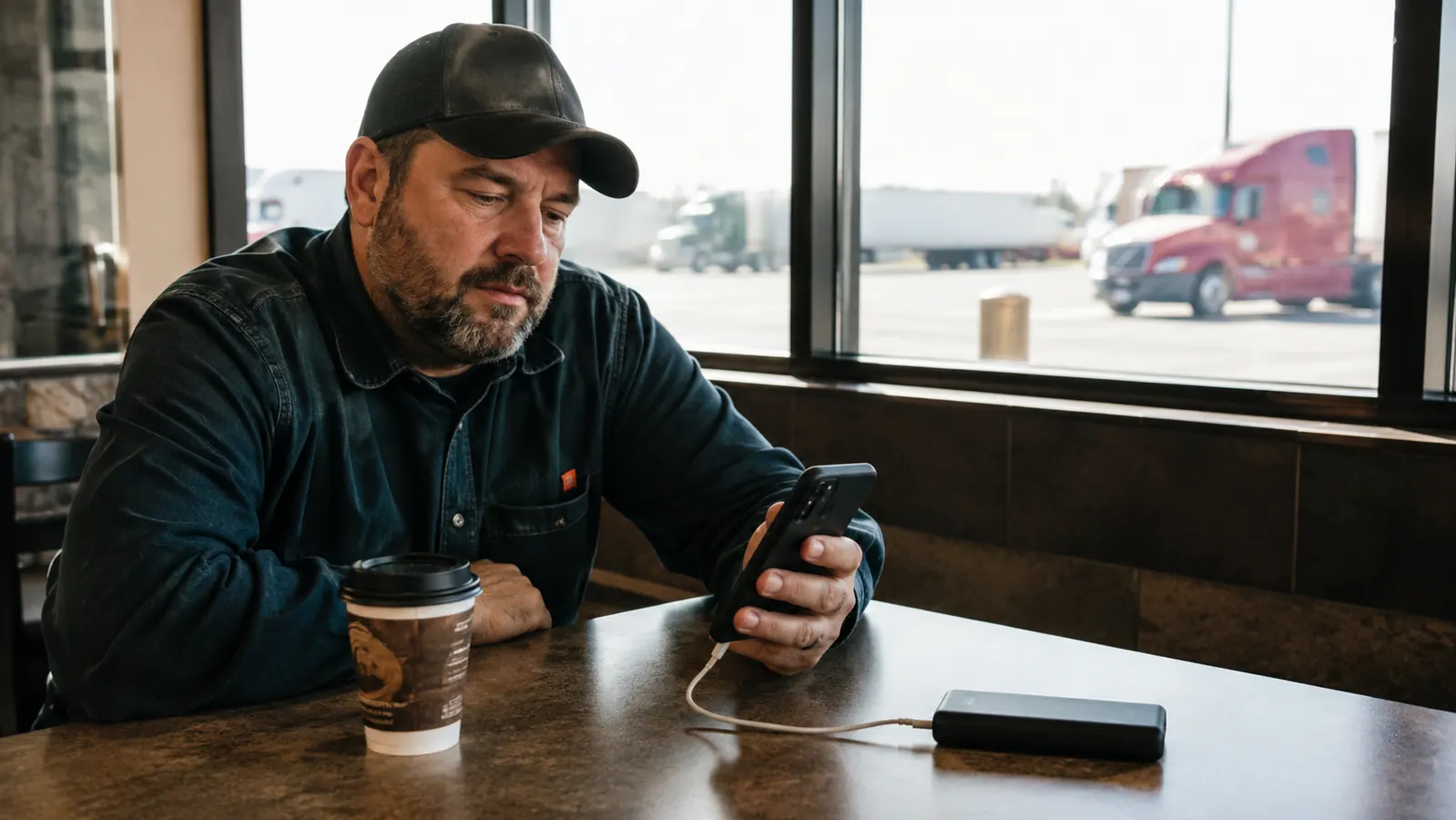
I picked up the Anker Zolo 20,000mAh power bank about a year ago, somewhere between a Pilot in Amarillo and a Flying J outside Albuquerque. My old battery pack had just died on a run from Dallas to Phoenix, and I needed something with enough juice to keep my phone, my GPS tablet, and my dashcam backup battery alive across three states. The Anker name was one I trusted. What I did not know yet was what a full year of daily road use was going to teach me about the built-in cable, the heat, and the recharge wait that nobody writes about.
This review is not about first impressions. Most reviews are. Guy opens the box, charges his phone twice, says it works great. That is not useful to me and it is not useful to you. If you are a trucker or a road traveler who relies on a power bank as real infrastructure, you need to know what happens after month two, month six, and month twelve. That is what I am going to tell you.
The Quick Verdict
Genuinely solid power bank that holds more charge than it has any right to at this size. The built-in cable is the weak link, not a dealbreaker yet, but one you need to watch. Buy it knowing you may need a backup cable in six months.
Amazon Check Today's Price →If your power bank dies 300 miles from the next outlet, you feel it. The Anker Zolo is the one I kept reaching for.
20,000mAh, 30W fast charge, and a built-in USB-C cable that means one less loose wire rolling around your cab. Check whether it's in stock and see current pricing on Amazon.
Amazon Check Today's Price on Amazon →How I Have Been Using It
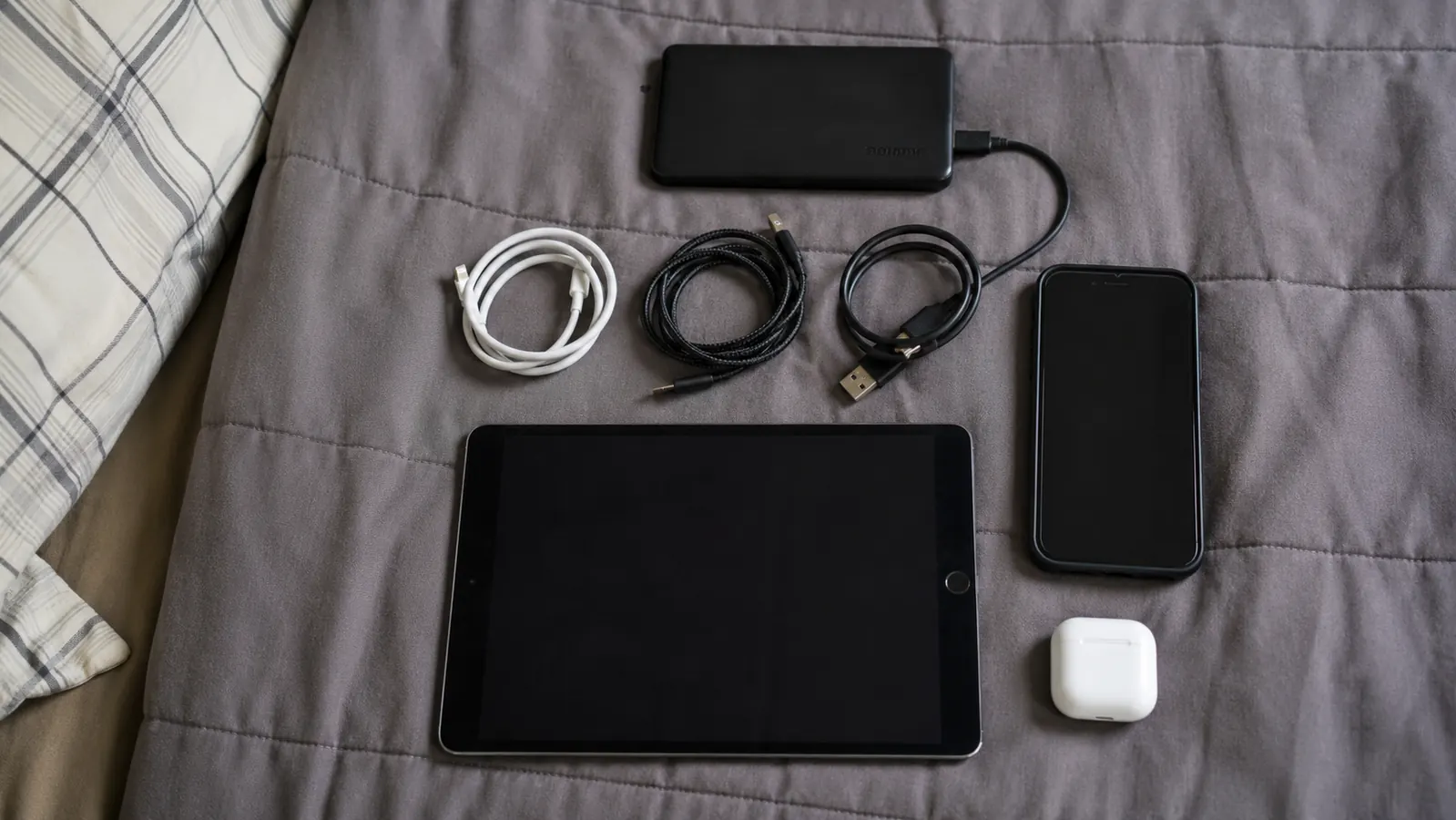
I run primarily the I-40 corridor, Dallas to LA and back, with some I-10 loops down through San Antonio and El Paso. My average shift runs eleven to twelve hours. In the cab, I am running a Samsung Galaxy S23 for personal use, a Garmin dēzl 780 truck GPS that I also charge via USB, a cheap Amazon tablet I use for company ELD logging, and occasionally a Bluetooth speaker for the overnight stops. That is a lot of draw for one power bank.
I keep the Anker Zolo in my center console cupholder when I am on the move. At truck stops, I pull it out and set it on the dash shelf or the bunk ledge. I charge it overnight through a 12V-to-AC inverter plugged into the cab power outlet. It does not see a real wall adapter more than once or twice a month. Most of its recharging happens via that inverter, which matters because inverter output is less clean than a direct wall plug, and it affects recharge time.
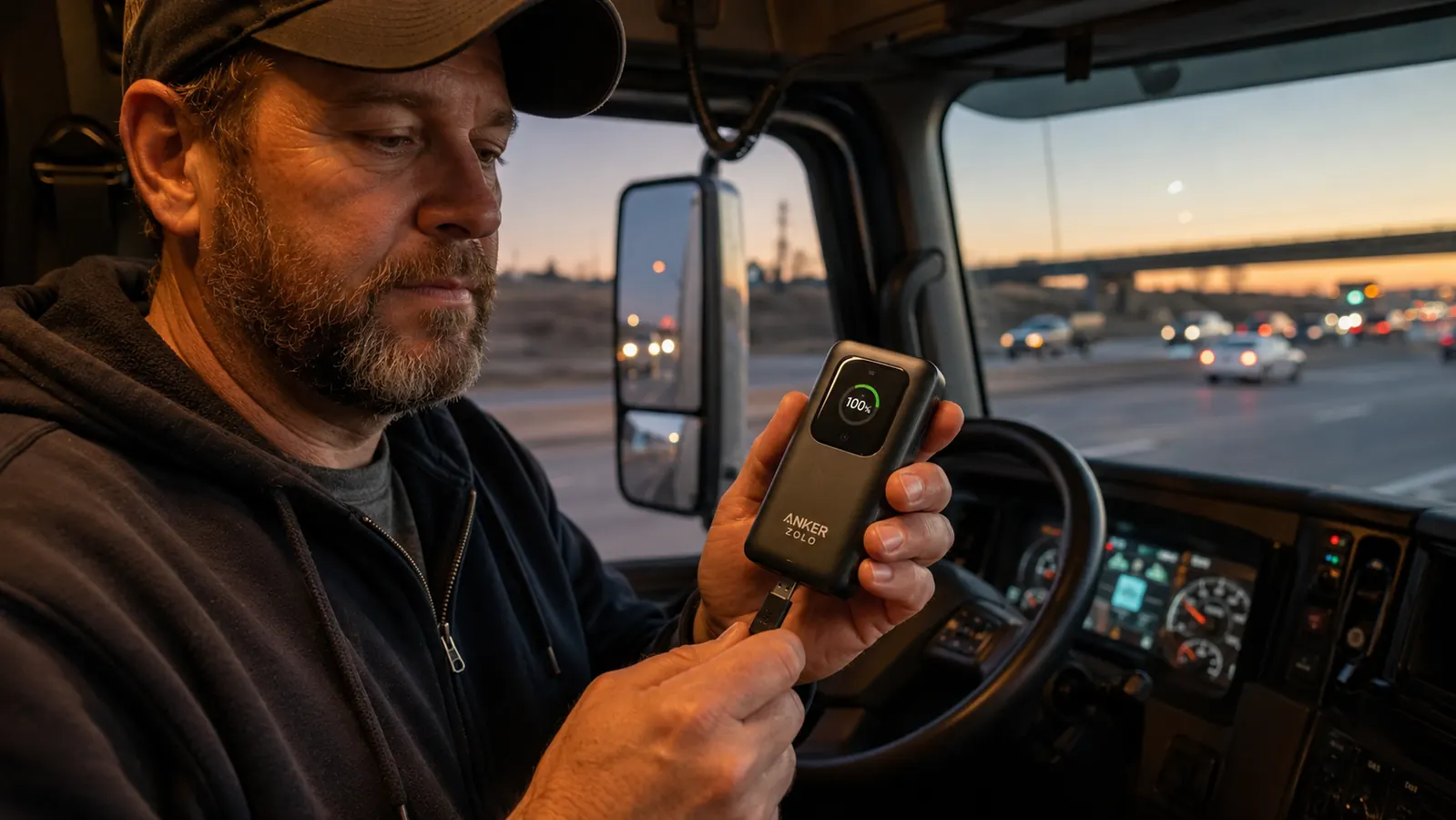
The built-in USB-C cable gets used roughly eight to twelve times a day. Pull it out, plug something in, retract or let it hang. That adds up to somewhere around 3,000 plug cycles over a year. That is the test that matters.
The Built-In Cable: What Actually Happens Over Time
Here is the thing nobody in the affiliate reviews mentions: built-in cables do not fail all at once. They degrade. At month three, the cable on my Zolo started showing a faint kink about an inch above the connector housing. Not a break. Not even a visible crack in the braiding. Just a subtle stiffness where it had been flexed in the same direction a few hundred times inside the console cupholder.
By month six, the kink was more pronounced. I started noticing that I had to hold the cable at a specific angle to get a reliable charging connection with my S23. Not every time. Maybe one in five connects required a small adjustment. That is annoying at 3 a.m. outside Tucson when you are trying to navigate a truck stop and your phone is at four percent.
At month twelve, the cable still works. It does not feel new. The connector housing has light scoring around the edges from going in and out of tight ports, and there is a clear stress point at that same junction. But it transfers power fine and hits 30W on a compatible phone. I have not had a hard failure. What I have done is add a six-inch USB-C cable to my console bag as a backup, because I no longer trust that built-in cable to be there for me in a bind.
If you are going to use this power bank the same way I do, buy a short backup cable the same day you order the Zolo. Do not wait to need it. A braided six-inch USB-C cable costs about six dollars and fits in the cupholder next to the bank. That is cheap insurance.
At month six I started adjusting the cable angle to get a solid connection at 3 a.m. That is not a deal-breaker. That is just what built-in cables do under real road use. Have a backup.
Recharge Time: The Number That Will Surprise You
The listing says 30W charging in. What the listing does not say in plain language is how long it actually takes to refill 20,000mAh from dead. The honest answer is: a while. Via my 12V inverter setup, which outputs a less-than-perfect 18W to the USB-C port, I am looking at roughly six hours to go from nearly empty to full. That is not a morning refuel. That is an overnight job.
Via a proper 30W USB-C wall adapter at a rest stop outlet, the math gets better. I timed it twice. From about fifteen percent to full took four hours and twenty minutes the first time, four hours and thirty-five minutes the second. So call it four and a half hours on a proper fast charger. That is still not fast in the sense of, "I have an hour at this Loves, let me top it off." You can put thirty percent back in that hour, but you are not walking away with a full bank.
The implication for road life is that you treat this bank like a secondary fuel tank. Plug it in when you park for the night. If you charge in short windows at truckstop parking, factor in that you are getting partial refills only. Two partial charges across a twelve-hour run will get you reasonably topped up, but you will not hit one hundred percent unless you commit to a four-hour overnight plug.
Heat: What It Gets Warm Doing and When to Pay Attention
The Zolo gets warm. Not alarming warm. But warm enough that I noticed it during back-to-back full-charge sessions in summer. Sitting in a truck cab in July in Texas, with the interior temperature pushing ninety degrees before the engine is running, the bank gets toasty when it is both charging itself and delivering charge to a device at the same time.
Anker's circuitry handles the heat well. I have not seen a thermal cutoff trigger, which the bank will do automatically if it overheats. But I made a habit of not stacking it under other gear in the summer months when I am charging it. It needs airflow. In a sealed console compartment with the lid down in July, you are asking for the thermal protection to kick in, which means slower charging or a temporary stop. Keep it where air can move around it.
In winter, the opposite issue. Cold batteries deliver less effective capacity. On a December run from Albuquerque to Flagstaff, sitting in a cab that had been cold-soaked overnight, the Zolo's output felt slightly lower than usual for the first twenty minutes of operation. Nothing dramatic. But 20,000mAh in a cold battery is not the same as 20,000mAh in a bank at room temperature. This is a lithium chemistry reality, not an Anker-specific flaw. Just something to know.
Weight and Carry: What You Actually Feel After a Week
The Zolo is rated at around 385 grams. That is a bit over thirteen ounces. In your hand, that is noticeable but not burdensome. In the side pocket of a bag, that weight starts to register after a week. I carry mine in the right outer pocket of a small crossbody bag I use at truck stops. After a few days, I automatically compensate for the tilt. It is not uncomfortable. It is just weight that you are aware of.
Compare that to the previous bank I was running, an older 10,000mAh pack that weighed about half as much. The step up in weight is real. The step up in capacity makes it worth it for anyone spending long stretches away from outlets. But if you carry a small travel bag and count every gram, the Zolo will be the heaviest thing in it. Know that going in.
Actual Charge Counts: What 20,000mAh Gets You in the Real World
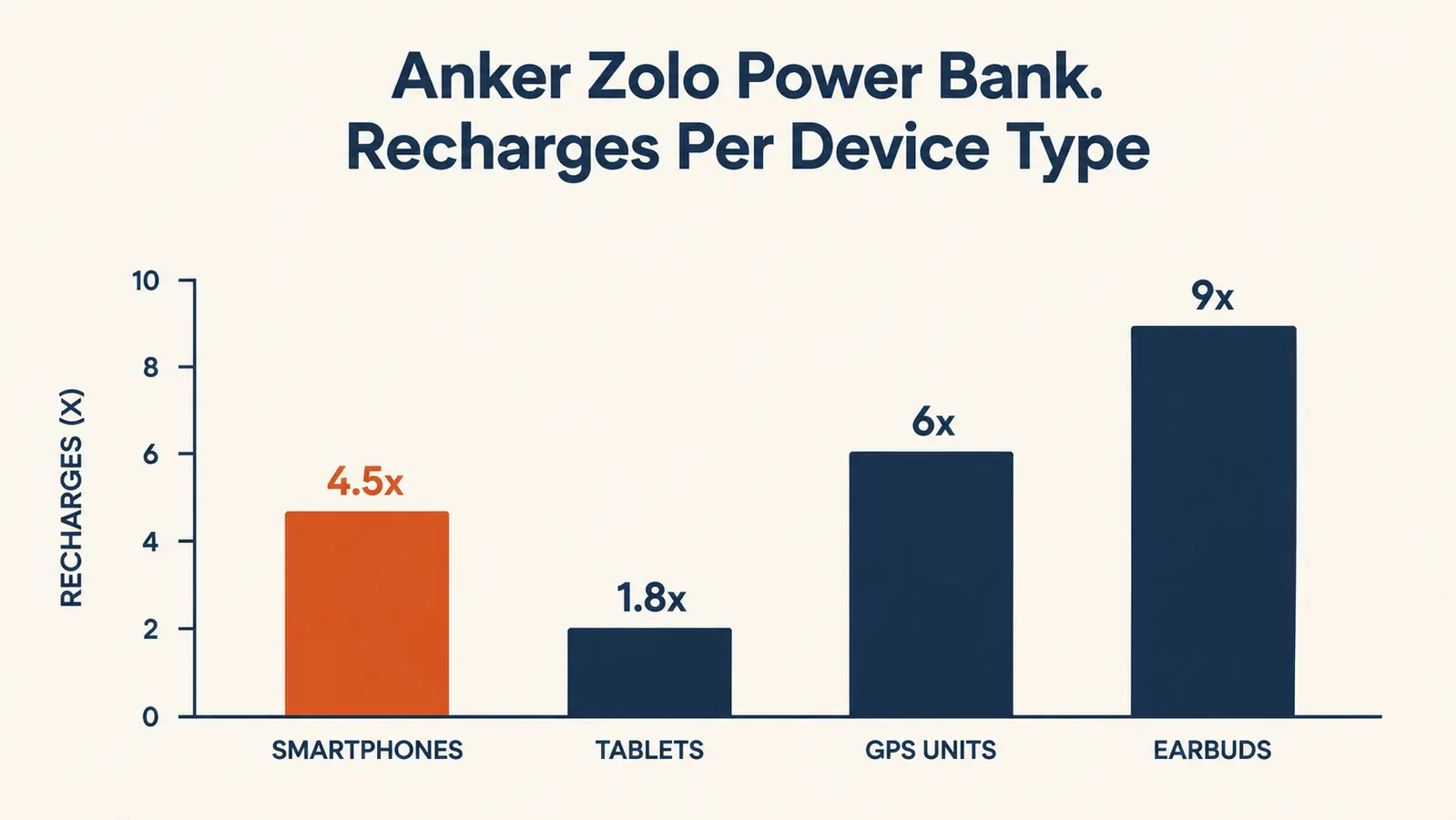
The specs say five to six full charges of a modern smartphone. That is marketing math using a nominal 3,500mAh battery and ideal conversion efficiency. In practice, with my S23 at around 3,900mAh and accounting for heat loss, I reliably get four full charges from dead-to-dead. Sometimes a hair over four if the phone was only half drained before the top-off.
For my Garmin dēzl 780, on low power mode, I can stretch about three full refills. For the ELD tablet, a ten-inch Android with a 6,000mAh battery, I get roughly two and a half full charges. Running the whole roster across a two-day haul, the Zolo handles everything with juice left over. That is the number that matters: two full days of active device use for a typical road setup.
What the Listing Does Not Tell You
The product page leads with the built-in cable as a feature. It is right to do that. The cable is genuinely convenient, especially on the road where loose cables disappear into seat gaps, roll under pedals, or get left at charging stations. Having it attached means it is always there. But the page does not tell you that the cable port on the bank itself, the pivot point where the cable tucks back in, is a small plastic hinge mechanism. At one year, that hinge feels slightly looser than it did new. Not broken. Just lived-in.
The page also does not mention that the LED charge indicator, a four-dot system, is not granular enough to tell you if you have sixty percent or seventy percent remaining. You know if you are in the bottom quarter or the top quarter. The middle range is a guess. I have learned to run a deliberate charge cycle before a long stretch rather than trust the LEDs to give me precision.
And the page does not tell you that the recharge LED stays lit the entire time the bank is charging, no sleep mode. Minor. But in a dark cab at 2 a.m. with the bank sitting on the dash shelf, those four blue dots are brighter than you want. A strip of black electrical tape over the LEDs costs nothing and solves it immediately.
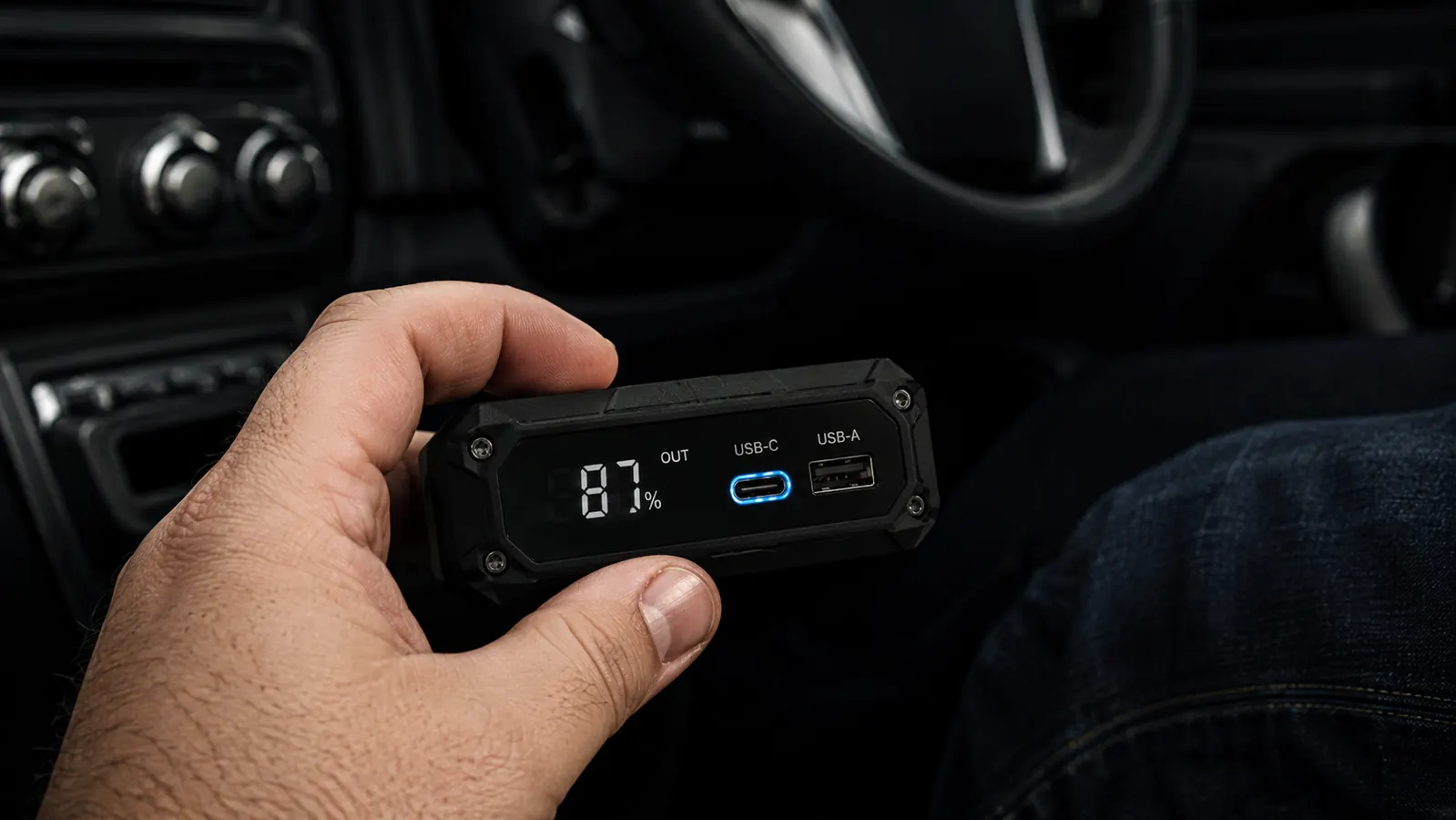
What We Liked
- 20,000mAh capacity genuinely covers a two-day device load for a standard road setup
- 30W output is real and fast on a compatible phone, cuts phone charge time to under an hour
- Built-in USB-C cable eliminates the missing-cable problem in daily road use
- Compact enough for a cupholder or jacket pocket despite the high capacity
- Anker's thermal protection circuitry handles summer heat in a truck cab without shutting down
- Four-dot charge indicator is simple to read at a glance, even in direct sunlight
Where It Falls Short
- Built-in cable develops a stress kink at the connector base by month four to six under daily use
- Full recharge takes four-plus hours on a proper 30W adapter, six-plus hours via a 12V inverter
- LED charge indicator lacks the granularity to distinguish sixty percent from seventy-five percent
- Recharge LEDs have no sleep mode and stay lit all night in a dark cab
- Weight is noticeable in a carry bag; thirteen-plus ounces is the heaviest item in most travel bags
- Hinge mechanism on the built-in cable pivot loosens with frequent use over time
Who This Is For
This bank is built for people who spend real time away from wall outlets. Truckers, long-haul road travelers, multi-day campers, and business travelers who never have enough time at a charging station to feel confident. The 20,000mAh capacity is the main draw, and it delivers on that promise. The 30W output means you are not waiting ninety minutes for your phone, you are waiting fifty. Those two things together make the Zolo a genuinely useful piece of road infrastructure.
If you charge from a wall outlet once a day and only need to top off one device per night, this bank is more than you need. A 10,000mAh pack at half the weight would serve you fine. The Zolo earns its size if and only if you are genuinely running multiple devices across stretches where charging opportunities are measured in days, not hours.
Who Should Skip It
Skip the Zolo if you are hard on cables and already know it. If you are the person whose charging cables all have taped-up connectors after three months, the built-in cable will frustrate you. It is not immune to the same physics that kills every cable. You can get the same battery capacity with a separate cable and rotate cables as they wear, which extends the useful life of the bank itself.
Also skip it if you are counting on quick top-offs at truck stop outlets. If your charging window is regularly under ninety minutes, a smaller bank that charges faster from zero might serve you better. The Zolo is a marathon charger, not a sprint charger. It is at its best when you leave it plugged in overnight. If that does not describe your routine, look at a 10,000mAh option before you commit. The Anker Zolo vs Baseus comparison breaks down the trade-offs side by side. And the full long-haul charging guide covers the complete setup beyond just the bank.
Four full phone charges, two days of road coverage, and a cable that is always attached. The Anker Zolo does not make promises it cannot keep.
After a year of I-40 and I-10 runs, it is still in my center console. The cable has wear. The bank still works. That is the honest summary. See today's price and in-stock status on Amazon before you decide.
Amazon Check Today's Price on Amazon →